Run business-critical applications on a physical server
reserved for your workload. Onlive Server offers Netherlands
dedicated servers in Amsterdam with AMD and Intel processor
options, plus NVMe, SSD, and HDD storage configurations.
A Netherlands dedicated server is a physical server hosted in a Dutch data center — most commonly in Amsterdam — that is assigned entirely to one customer. Unlike shared or VPS hosting, you get exclusive access to the full CPU, RAM, storage, and network resources of the machine, with no other tenants competing for the same hardware.
Businesses typically choose a Netherlands-based server when their users, operations, or compliance requirements are centered in the Netherlands or the wider European Union. Amsterdam is home to AMS-IX, one of the largest internet exchange points in the world, which gives servers hosted there strong connectivity to networks across Europe. This makes the location a practical fit for latency-sensitive applications, high-traffic websites, and businesses that want their infrastructure physically closer to European visitors.
Select a dedicated server configuration based on your
workload requirements. Choose CPU performance, memory,
storage, and network resources designed for websites,
applications, databases, and business workloads.
Our Netherlands dedicated server infrastructure is located in
Amsterdam, Noord-Holland. The following network details provide
information about the server location, data center region, and
registered infrastructure details.
DATA CENTER
Prioritize CPU performance, enough memory for peak demand,
and fast NVMe storage for frequent database or application reads.
Size RAM and NVMe capacity for the working data set, write
activity, snapshots, and expected growth. Confirm the RAID
design and backup plan.
Prioritize usable storage capacity, drive type, rebuild
planning, and the network allowance needed for uploads,
downloads, and replication.
Compare processor characteristics, port speed, transfer
allowance, IP needs, DDoS policy, and the support process
before launch.
Amsterdam can be a practical location when your users, operations,
or data-residency plan are centered in the Netherlands or Europe.
Hosting closer to an audience can reduce network distance, although
real-world latency also depends on routing and the visitor connection.
A Netherlands location can support a data-residency strategy; assess
your contracts, technical controls, and processing roles separately
for GDPR or other compliance requirements.
Choose the level of help your team needs before you order. The plan
and order flow should clearly state whether operating-system
installation, control panel work, migration, monitoring, security
administration, DDoS protection, and incident support are included
or optional.
Clear service boundaries help customers compare plans and avoid
assumptions after deployment.
Installation and configuration support based on service requirements. Security administration, DDoS protection, and monitoring options. Assistance for moving workloads with clear service boundaries. Defined support processes for faster issue resolution.
Dedicated Servers in
Amsterdam, Netherlands
What Is a Netherlands Dedicated Server?
Netherlands Dedicated Server
Hosting Plans
Netherlands Dedicated Server
IP & Data Center Information
Amsterdam, Netherlands
AMS
Choose the Right Configuration
Business applications and APIs
Databases and analytics
Large files and media
High-connection workloads
Why Choose an Amsterdam Location?
Amsterdam, Netherlands
Strategic European Hosting Location
Service, Security, and Support
Operating System
Security Management
Migration Support
Incident Support
Frequently Asked Questions
Our Popular Blog
-
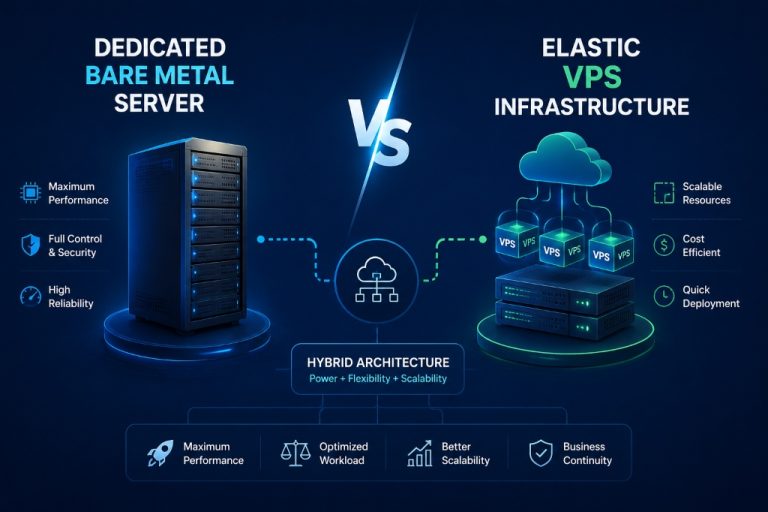
Hybrid Hosting Architecture: Combining Dedicated Bare Metal and Elastic VPS for Maximum Performance
⚡ Quick Answer: What is Hybrid Multi-Tier Hosting Architecture? A hybrid hosting architecture combines bare-metal dedicated servers for database and intensive compute layers with elastic VPS instances running containerized web frontends behind an Anycast load…
-
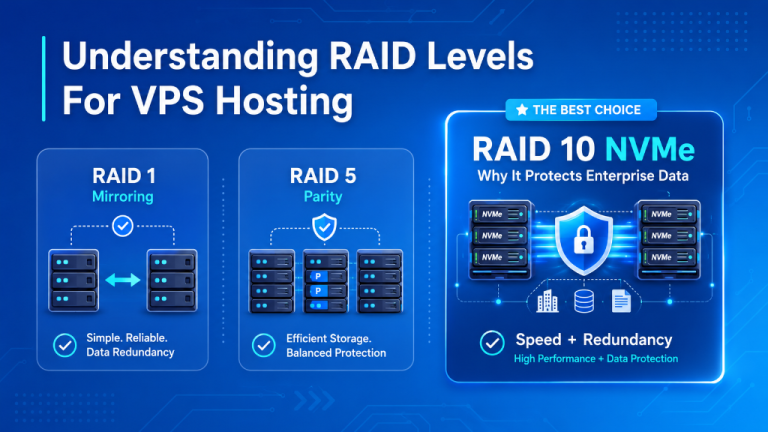
Understanding RAID Levels for VPS Hosting: Why RAID 10 NVMe Storage Protects Enterprise Data
⚡ Quick Answer: Why RAID 10 NVMe Storage is Essential for Database Servers RAID 10 (striping with mirroring) delivers the gold standard for database workloads by providing 100% data redundancy combined with maximum read and…
-
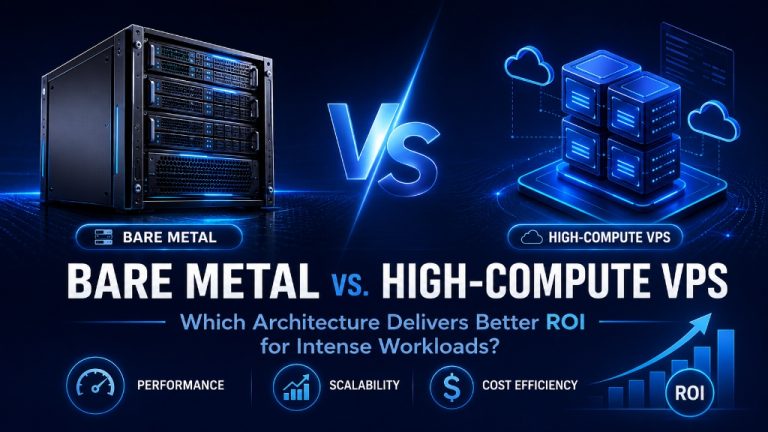
Bare Metal vs. High-Compute VPS: Which Architecture Delivers Better ROI for Intense Workloads?
⚡ Quick Answer: Bare Metal vs. High-Compute VPS for Intensive Workloads Bare-metal dedicated servers deliver superior ROI for sustained 24/7 compute loads, large databases, and high-frequency virtualization by eliminating hypervisor CPU steal, virtualization memory overhead,…