USA Dedicated Server Hosting in Missouri
Get a physical server reserved for your workload in a U.S. data center. Onlive Server offers Intel Xeon and AMD configurations, 8 GB to 512 GB RAM, NVMe, SSD or HDD storage, Linux or Windows, full root or administrator access, and 1 Gbps connectivity on eligible plans. Managed support is available, and published prices start at $35 per month.

What Is a USA Dedicated Server?
A USA dedicated server is a physical machine hosted in a U.S. data center and assigned to one customer. Unlike shared hosting or a VPS, the server’s processor, memory and local drives are not divided among unrelated hosting accounts. You can select the operating system, install your own software, set security rules and tune the server for a specific workload.
Dedicated hosting is a good fit when predictable resources, deep system control, high sustained usage, custom software or workload isolation matters more than instant resizing. A VPS or cloud instance may be the better choice when the workload is smaller, changes rapidly or needs short-lived capacity.
USA Dedicated Server Plan
Choose powerful dedicated server solutions designed for high performance, reliability, and business workloads.
Why Host a Dedicated Server in the USA?
Keep infrastructure Closer to U.S. Users
Hosting closer to the people or systems using an application can shorten the network path and reduce latency. It does not guarantee a specific response time: user location, internet routing, application design, database queries, caching and third-party services also affect performance. Test the Missouri route from the regions that matter to you before ordering.
Support U.S. Data-Location Requirements
A server in Missouri keeps the primary machine in the United States. That may help an organization meet an internal data-location policy, but the server location alone does not establish regulatory compliance. Backups, logs, monitoring tools, CDN copies, support access, contracts and application configuration must be reviewed as part of the full system.
Choose a Practical Central U.S. Location
Missouri can be a useful option for applications serving users across several U.S. regions. The right location still depends on measured latency, audience concentration, upstream networks, replication design and disaster-recovery needs. For a national audience, use a CDN or a multi-location architecture where the application requires it.
Dedicated Server vs VPS, Cloud and Shared Hosting
| Hosting Type | Resource Model | Control | Best Fit |
|---|---|---|---|
| Shared Hosting | Many Customers Share the Server and Platform | Limited | Small Sites With Standard Software and Modest Traffic |
| VPS | A Virtual Machine with Allocated Resources on Shared Physical Hardware | Moderate to High | Growing Sites, Development Environments and Steady Mid-Sized Workloads |
| Cloud Instance | Virtualized Capacity Delivered From a Cloud platform | High through APIs | Elastic services, Automation, Temporary Capacity and Multi-service Architectures |
| Dedicated Server | One Customer Uses the Physical Server | Full OS-level Control | Sustained Workloads, Custom Stacks, Databases, Virtualization, High I/O and Predictable Resource Demand |
Choose dedicated hosting when the workload can use the machine consistently and the extra control justifies managing a full server. Choose VPS or cloud when rapid resizing, smaller starting capacity or infrastructure automation is more important.
Processor:
Clock Speed, Cores and Platform
A high clock speed can help applications that depend on a few busy threads, including some game servers and older business software. More cores are useful for virtualization, parallel builds, analytics, media processing and many concurrent services. Compare the exact Intel or AMD model, generation, core count and workload benchmarks instead of relying only on the processor brand.
01
Memory:
Active Data and Concurrency
RAM affects how much active application data, cache, database working set or virtual-machine memory the server can hold. Leave headroom for traffic peaks and operating-system processes. If memory usage is already known, size from observed peak consumption rather than a generic rule.
02
Storage:
NVMe, SSD, HDD and RAID
NVMe storage is suited to latency-sensitive databases, busy ecommerce systems, high-I/O applications. SATA SSD can be a cost-effective choice for general web and application hosting. HDD is useful when capacity matters more than random I/O performance. Confirm usable capacity after RAID, because mirrored or parity layouts reduce the space available to the OS.
03
Network:
Port Speed and Data Transfer
A 1 Gbps port describes the maximum link rate, not a promise that every transfer will run at 1 Gbps. Actual throughput depends on the network path, remote endpoint, protocol overhead, server load and plan policy. If a plan is described as unmetered, confirm the port speed, fair-use terms, traffic restrictions and whether any sustained-throughput limit applies.
04What Does the Uptime SLA Cover?
Onlive Server’s published managed dedicated server SLA states 100% network and power uptime and describes a service credit when internet connectivity or power is unavailable. The SLA does not mean every website or application will be available 100% of the time. Operating-system faults, software errors, maintenance, customer changes, attacks, upstream dependencies and excluded events may affect availability.
Review the current SLA before purchase and confirm that the selected plan is eligible. The order form and service agreement should identify the measurement method, exclusions, claim window and credit calculation.

Common Uses for a USA Dedicated Server
High-Traffic Websites and Ecommerce
Dedicated CPU and memory can provide a predictable base for busy storefronts, news sites and membership platforms. Prioritize database performance, caching, NVMe storage, backups and a tested failover plan.
SaaS and Business Applications
Use dedicated hosting for steady application workloads, private services and custom software stacks. Size for concurrent users, background jobs, database growth and maintenance windows.
Databases and Analytics
Choose sufficient RAM for the working set, fast storage for I/O, and a backup/replication design that meets recovery targets. More CPU cores help parallel queries only when the database and workload can use them.
Game Servers
Favor strong per-core performance for many game engines, enough memory for the player count and mods, low measured latency to players, DDoS mitigation and fast recovery from updates.
Media and Streaming
Estimate sustained outbound traffic, concurrent viewers, encoding needs and content-storage growth. A 1 Gbps port may be the limiting factor long before CPU or RAM, depending on bitrate and concurrency.
Virtualization and Development
More cores, RAM, local I/O and remote-console access matter when running virtual machines, build systems or isolated test environments. Confirm which hypervisors and nested-virtualization options are supported.
Backup and Storage Target
Capacity-focused HDD configurations can store large datasets, but the dedicated server should not be the only copy. Use separate credentials, immutability where available and another failure domain.
How to Choose the Right USA Dedicated Server
Map the Audience and Dependencies
Identify where users, databases, APIs, offices and backup targets are located. Test network latency to Missouri.
Profile the Workload
Record peak CPU, memory, storage I/O, disk usage, outbound traffic, connections and growth from the current environment.
Select CPU and RAM
Match per-core speed or core count to the application, then leave operating and peak-usage headroom.
Design Storage and Recovery
Choose NVMe, SSD or HDD; calculate usable RAID capacity; and define off-server backup retention and restore targets.
Confirm Network Terms
Verify port speed, included transfer, unmetered or fair-use conditions, IP requirements, DDoS coverage and private-network needs.
Define the Operating Model
Choose Linux or Windows, the control panel, root-access policy, management scope, monitoring, patching ownership and support contacts.
Confirm Commercial Terms
Check inventory, deployment estimate, setup and license fees, billing term, renewal price, cancellation rules and SLA eligibility.
Why Choose Onlive Server For USA Dedicated Hosting?
Missouri Server Location
Host a single-tenant machine in the United States for U.S.-focused websites, applications and infrastructure.
Intel and AMD Configurations
Choose from current Intel Xeon and AMD inventory based on per-core speed, core count, memory and budget.
Flexible Storage
Select NVMe, SSD or HDD options according to I/O performance, capacity and cost requirements.
Linux or Windows
Use the operating system and compatible control panel that fits the application.
Full Administrative Access
Manage the operating environment with root or administrator access, subject to plan and acceptable-use terms.
24/7 Technical Support
Contact the support team around the clock; confirm the exact management and response scope in the selected plan.
Published Managed-Server SLA
Review the network and power uptime commitment, eligibility, exclusions and service-credit process before ordering.
USA Dedicated Server Hosting FAQs
Expert Guides for USA Dedicated Server Solutions
-
How USA Dedicated Server Hosting by OnliveServer Is a Cost-Effective Solution
Introduction The server determines whether or not you will be successful in your web-based ventures. The importance of choosing a good server cannot be overstated…
-
Unlimited Traffic Generation with Cheap USA Dedicated Server
The online business is the sphere where the main secret of success is to create regular traffic. However, it is not enough to simply get…
-
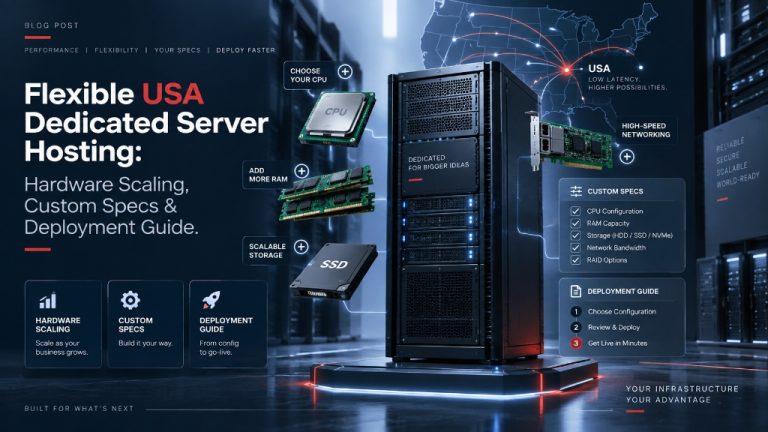
Flexible USA Dedicated Server Hosting: Hardware Scaling, Custom Specs & Deployment Guide
NR Naveen Rajput Infrastructure Engineer & Systems Specialist 🖥️ Dedicated Server Architecture ⏱️ 8 Min Read 🛡️ Verified Technical Guide Modern enterprise web applications, high-concurrency…