

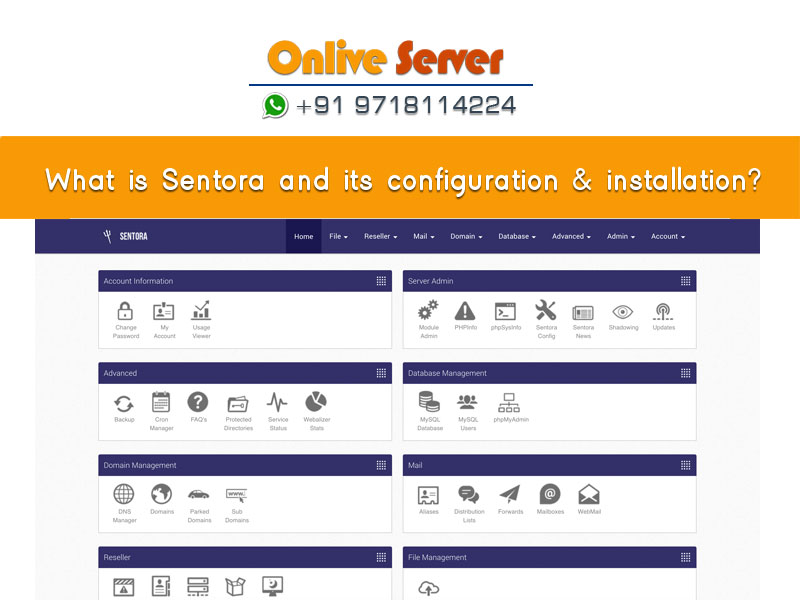
Quick Answer: What Is Sentora?
Sentora is a free, open-source web hosting control panel designed specifically for Linux servers (predominantly CentOS and Ubuntu). Forked from the discontinued ZPanel project by its original developer community, Sentora provides a web-based graphical management interface that orchestrates the Apache HTTP server, PHP, MariaDB/MySQL databases, Postfix mail transfer agents, Dovecot IMAP/POP3 services, and BIND9 DNS into a unified multi-tenant hosting appliance.
Providing multi-tenant web hosting services without incurring exorbitant commercial software licensing fees has long been a primary objective for web agencies, developers, and hosting entrepreneurs. Understanding what is sentora requires examining the community-driven resurgence of open-source hosting control planes. Established in 2014 as the official community fork and successor to ZPanel, Sentora was created to provide a completely free, open-source hosting platform optimized exclusively for Linux operating systems. This comprehensive architectural evaluation explores Sentora’s LAMP foundation, installation workflows, historical evolution, and how it compares to contemporary open-source and commercial hosting panels.
The Historical Origin & Evolution of Sentora
To understand Sentora, one must review the legacy of ZPanel. During the early 2010s, ZPanel gained a massive following as one of the few free control panels supporting multi-site hosting across Windows and Linux. However, following commercial acquisition disagreements and mounting security vulnerabilities in ZPanel’s core PHP code base, development stalled.
In 2014, the core volunteer developers separated from ZPanel and launched the Sentora project. Sentora had three explicit architectural mandates:
- Drop Windows Support: Completely remove legacy Windows code to eliminate architectural bloat and focus 100% on hardened enterprise Linux distributions.
- Patch Critical CVE Vulnerabilities: Refactor the PHP backend to introduce strict input validation, parameterized database queries, and secure daemon permission separation.
- Maintain Community-Driven Open Source: Release the entire software suite under the GNU General Public License (GPL v3), guaranteeing perpetual freedom from commercial paywalls.
Control Panel Architecture & Feature Comparison Matrix
The comparison table below illustrates where Sentora sits relative to historical predecessors and modern cloud hosting panels:
| Control Panel | Licensing | Web Stack Architecture | Multi-Tenant Quotas | Active Maintenance Status | Production Suitability |
|---|---|---|---|---|---|
| Sentora | GPL v3 (Free) | Classic Apache / PHP / MariaDB | Yes (Client & Reseller) | Low / Community Maintenance | Legacy Labs & Testing |
| ZPanel (Predecessor) | GPL v3 (Free) | Apache / PHP 5.x | Yes | Completely Abandoned | Unsafe for Production |
| CyberPanel | Freemium / Open Source | OpenLiteSpeed / LSCache | Yes | Very Active | Modern High-Speed Hosting |
| cPanel / WHM | Commercial Paid | Multi-Web Server / Multi-PHP | Enterprise Tiered | Industry Standard | Enterprise Standard |
When deploying Sentora for multi-client hosting, enforce strict PHP-FPM pool isolation and configure mod_security with OWASP rules to block web application exploits. Relocating Sentora’s administrative port and running Fail2ban ensures that unauthorized login attempts are thwarted before attacking MySQL databases.
For developers testing multi-tenant hosting environments on modern cloud infrastructure, our high-speed Linux VPS hosting provides fast instant deployment, isolated memory, and full root access.
- Modular Daemon Execution: Automated cron daemon translating web UI updates into server configs.
- ProFTPd Virtual Accounts: MySQL-authenticated FTP users isolated from root Linux system accounts.
- Suhosin PHP Hardening: Disables hazardous execution functions to prevent cross-account exploitation.
- Reseller Tier Management: Allocate bandwidth, mailbox, and domain quotas across reseller clients.
For commercial hosting agencies requiring bare-metal compute performance, unmetered network bandwidth, and hardware RAID data protection, explore our bare metal dedicated server infrastructure options.
To learn more about the predecessor project that preceded Sentora, review our technical retrospective on what is ZPanel and its control panel history.
Under the Hood: Sentora Software Architecture
Sentora transforms a minimal Linux server into a multi-tenant hosting appliance by coordinating key open-source daemons:
- Apache Virtual Host Generation: When a user registers a domain in the panel, Sentora writes a dedicated virtual host configuration block in
/etc/sentora/configs/apache/httpd-vhosts.conf, isolating document roots to/var/sentora/hostdata/. - MySQL Database Management: Integrates with MariaDB/MySQL to provision isolated database users and databases, offering a customized phpMyAdmin interface for client web management.
- Mail Delivery Stack: Coordinated by Postfix (SMTP mail routing) and Dovecot (IMAP/POP3 authentication) against the Sentora database, backed by Roundcube webmail.
- DNS Automation: Automatically compiles forward and reverse zone files for BIND9, allowing servers to operate as self-contained nameservers.
- Background Daemon Cron Execution: Sentora uses a background cron daemon (
sentora-daemon) that runs every 5 minutes to process queued administrative tasks, update disk quota calculations, and safely reload service daemons.
Step-by-Step Sentora Installation & Initial Configuration Guide
Installing Sentora requires a clean, minimal 64-bit Linux installation. Because Sentora automates the deployment and configuration of an entire LAMP stack (Apache, MariaDB, PHP), running the installer on a server with existing web or database daemons can cause package conflicts. Follow this step-by-step production workflow to prepare, install, and configure your Sentora hosting node.
- Fresh Minimal OS: CentOS 7 (64-bit) or Ubuntu 14.04/16.04 minimal server image without pre-installed Apache, Nginx, or MySQL.
- Hardware Sizing: Minimum 1GB RAM (2GB+ recommended if running ClamAV mail scanning), 1 vCPU, and at least 20GB disk space.
- Dedicated FQDN Hostname: A valid Fully Qualified Domain Name (e.g.,
panel.yourdomain.com) must resolve via DNS A record to your server’s public IP address before running the installation script.
Step 1: System Package Update & Hostname Setup
Connect to your server via SSH as the root user. Update all core operating system repositories and configure the system hostname to match your administrative FQDN:
# For CentOS 7: Update packages and install wget
sudo yum update -y && sudo yum install wget -y

# For Ubuntu: Update package index and utilities
# sudo apt-get update && sudo apt-get upgrade -y && sudo apt-get install wget -y

# Set system FQDN hostname (replace panel.yourdomain.com with your real domain)
sudo hostnamectl set-hostname panel.yourdomain.com

# Verify that the FQDN resolves correctly
hostname -f
Step 2: Download & Execute the Sentora Auto-Installer
Navigate to the /root home directory and fetch the automated Sentora installation script. Make the script executable and initiate the setup wizard:
# Switch to root directory
cd /root

# Download the official installation script
wget sentora.org/install

# Grant execution permissions
chmod +x install

# Run the automated installer wizard
sudo ./install
Step 3: Interactive Configuration Prompts
During the automated installation process, the interactive bash wizard will ask you to confirm three key operational parameters:
- Geographic Timezone Selection: Choose your server’s geographical region (e.g., America, Europe, or Asia) and appropriate city to ensure accurate cron task execution and Apache access timestamps.
- Server Public IP Confirmation: The installer will auto-detect your external IPv4 address. Press
Enterto confirm or manually enter your static public IP address. - Sentora Domain / FQDN Entry: Enter the exact FQDN you assigned earlier (e.g.,
panel.yourdomain.com). Warning: Do not use an IP address or naked domain; you must use a designated subdomain.
After confirming these settings, the installer will automatically compile Apache 2.4, MariaDB/MySQL, PHP, ProFTPd, Postfix, Dovecot, phpMyAdmin, and the core Sentora framework. The compilation and setup process typically takes 10 to 20 minutes depending on your server’s network speed and processor throughput.
Step 4: Credential Retrieval & System Reboot
Once the software compilation finishes, the installer displays your administrative credentials directly in the terminal and stores a backup copy locally on the filesystem:
# View generated administrative passwords saved by the installer
cat /root/passwords.txt

# The file contains:
# - Sentora Web URL (http://panel.yourdomain.com)
# - Sentora Administrator Username (zadmin)
# - Sentora Administrator Password
# - MySQL / MariaDB root Password

# Reboot the server to finalize kernel networking and start daemons
sudo reboot
Step 5: Firewall & Network Port Hardening
After the server reboots, configure your system firewall (Firewalld on CentOS or UFW on Ubuntu) to permit web, mail, FTP, and DNS traffic while restricting administrative SSH access:
# On CentOS (Firewalld): Open HTTP, HTTPS, FTP, Mail, and DNS ports
sudo firewall-cmd --permanent --add-service={http,https,ftp,smtp,smtps,pop3,pop3s,imap,imaps,dns}
sudo firewall-cmd --permanent --add-port=30000-35000/tcp  # ProFTPd Passive Ports
sudo firewall-cmd --reload

# On Ubuntu (UFW):
# sudo ufw allow 80/tcp && sudo ufw allow 443/tcp && sudo ufw allow 21/tcp
# sudo ufw allow 25/tcp && sudo ufw allow 465/tcp && sudo ufw allow 587/tcp
# sudo ufw allow 110/tcp && sudo ufw allow 995/tcp && sudo ufw allow 143/tcp && sudo ufw allow 993/tcp
# sudo ufw allow 53 && sudo ufw allow 30000:35000/tcp && sudo ufw enable
Step 6: First-Run Web GUI Login & Domain Provisioning
Once services are active and the firewall is configured, complete the initial post-installation setup:
- Access Admin Interface: Open your web browser and navigate to
http://panel.yourdomain.com. - Authenticate as Administrator: Enter
zadminas the username and input the random password retrieved from/root/passwords.txt. - Rotate Administrative Password: Immediately navigate to Account > Change Password to set a high-entropy custom password.
- Provision First Client & VHost: Go to Domain Management > Domains to add your primary website domain and configure virtual host directories under
/var/sentora/hostdata/zadmin/public_html/.
Sentora Daemon Management, ProFTPd Configuration & Security Protocols
Sentora is an open-source web hosting control panel engineered specifically for Linux-based servers. Built as a modernized continuation of the ZPanel project, Sentora provides a modular, multi-client hosting environment suitable for small web hosting providers, educational labs, and hobbyist server administrators. The core management functions of Sentora are driven by an automated backend daemon running as a root cron job (sentora-daemon) that synchronizes GUI transactions into live daemon configurations.
Unlike control panels that directly execute Apache restarts or DNS reloads on every user button click, Sentora uses an asynchronous event queue stored in MySQL. The daemon.php script processes queued tasks in batches every five minutes, preventing server CPU spikes during peak administrative traffic.
1. The Sentora Backend Daemon & Configuration Synchronization
Every administrative action taken in the Sentora web interface—such as adding a virtual host, editing a DNS record, or creating a mailbox—is staged in the MySQL database. The automated backend daemon manages the following operational lifecycle:
- Database Event Polling: Every 5 minutes via a root crontab entry (
*/5 * * * *), the daemon polls internal tables (x_vhosts,x_dns,x_mailboxes) for pending modifications. - Static Configuration Compilation: It dynamically compiles these database records into native Apache virtual host files (
/etc/sentora/configs/apache/httpd-vhosts.conf) and BIND zone files. - Graceful Service Reloading: Once configuration syntax is verified, the daemon issues graceful reloads to Apache, BIND, and Postfix to apply changes without dropping active TCP connections.
- Disk & Bandwidth Usage Accounting: The daemon tallies user disk space and monthly bandwidth consumption, flagging accounts that breach allocated quotas.
# Force immediate execution of the Sentora daemon without waiting for the 5-minute cron
sudo php -q /etc/zpanel/panel/bin/daemon.php

# Monitor live configuration generation and service reload logs
sudo tail -f /var/sentora/logs/sentora-daemon.log
2. Hardening ProFTPd with Virtual MySQL Authentication & TLS
FTP management within Sentora relies on ProFTPd backed by MySQL database authentication. This design eliminates the security risk of creating native Linux system user accounts for FTP users:
- Virtual User Isolation: FTP accounts exist purely as rows within the MySQL database, preventing FTP users from obtaining shell access or reading system configuration files.
- Strict Chroot Confinement: Each tenant is strictly chrooted to their specific web root (
/var/sentora/hostdata/username/public_html), preventing directory traversal attacks. - Mandatory TLS/FTPS Encryption: Activating the
mod_tlsmodule encrypts authentication credentials and data transfer streams, neutralizing packet sniffing vulnerabilities. - Granular Transfer Quotas: Administrators can enforce precise upload/download bandwidth limits and storage quotas per user directly from the interface.
<IfModule mod_tls.c>
TLSEngine on
TLSLog /var/log/proftpd/tls.log
TLSProtocol TLSv1.2 TLSv1.3
TLSRequired on
TLSRSACertificateFile /etc/pki/tls/certs/sentora.crt
TLSRSACertificateKeyFile /etc/pki/tls/private/sentora.key
TLSVerifyClient off
</IfModule>
3. Production Security Protocols: PHP Hardening & Fail2ban Jails
Hardening a Sentora deployment requires implementing strict PHP security policies and perimeter intrusion defenses across all public services:
- Disabling Dangerous PHP Execution Functions: In production
php.ini, disable hazardous system functions (exec,shell_exec,passthru,system,proc_open,popen) to prevent web shell exploits. - Port Obfuscation & IP Whitelisting: Move Sentora’s administrative GUI from default ports to a custom high port or restrict access via firewall rules to known administrative static IP addresses.
- Fail2ban Intrusion Defense: Deploy customized Fail2ban filter jails to monitor Apache authentication logs, ProFTPd failed logins, and SSH connection attempts, automatically banning malicious botnet IPs.
[sentora-auth]
enabled = true
port = http,https
filter = sentora-login
logpath = /var/sentora/logs/sentora-login.log
maxretry = 4
bantime = 86400

[proftpd-auth]
enabled = true
port = ftp,ftp-data,ftps,ftps-data
filter = proftpd
logpath = /var/log/proftpd/proftpd.log
maxretry = 3
bantime = 86400While Sentora offers a simple, lightweight interface for lab and development environments, enterprise production applications requiring kernel-level cgroups isolation, proactive zero-day patch management, and high availability benefit from a robust high-speed virtual private server instances or bare-metal cheap dedicated server hosting architecture.
Frequently Asked Questions (FAQ)
Is Sentora still actively developed today?
Sentora development has slowed significantly in recent years. While community patches exist, it does not receive frequent feature updates or rapid security releases compared to modern active projects like CyberPanel, CloudPanel, or cPanel.
Can Sentora run on modern Linux distributions like AlmaLinux 9 or Ubuntu 22.04?
Installing official Sentora packages on newer distributions requires substantial manual package patching because its core dependencies rely on legacy PHP 7.x libraries and older Apache configuration layouts.
Does Sentora support multi-reseller hosting?
Yes. Sentora implements a multi-tier hierarchy supporting Administrators, Resellers, and end-user Clients, allowing resellers to create customized hosting packages with dedicated disk and bandwidth quotas.
Can I install Let’s Encrypt SSL certificates in Sentora?
While Sentora does not feature native automated Let’s Encrypt integration in its legacy core, community-authored modules (such as the Certbot extension) allow administrators to automate SSL issuance.
How does Sentora differ from Webmin?
Webmin is a broad operating system configuration tool that directly edits Linux system files. Sentora is a specialized multi-tenant web hosting appliance that abstracts system management behind a simplified client/reseller hosting dashboard.
What is the recommended path for migrating away from Sentora?
Export client databases using mysqldump, archive website document roots in /var/sentora/hostdata/ using tar, and import them into a modern Linux VPS running an actively maintained control panel like cPanel, CyberPanel, or CloudPanel.
Conclusion: The Legacy of Open-Source Hosting
Sentora represents a noteworthy milestone in open-source web hosting history, demonstrating the capacity of volunteer communities to rescue abandoned software, fix critical vulnerabilities, and provide free hosting tools. For contemporary production hosting, pairing modern, actively maintained control panels with enterprise NVMe cloud VPS or dedicated bare-metal infrastructure provides the optimal balance of security, speed, and long-term reliability.
