

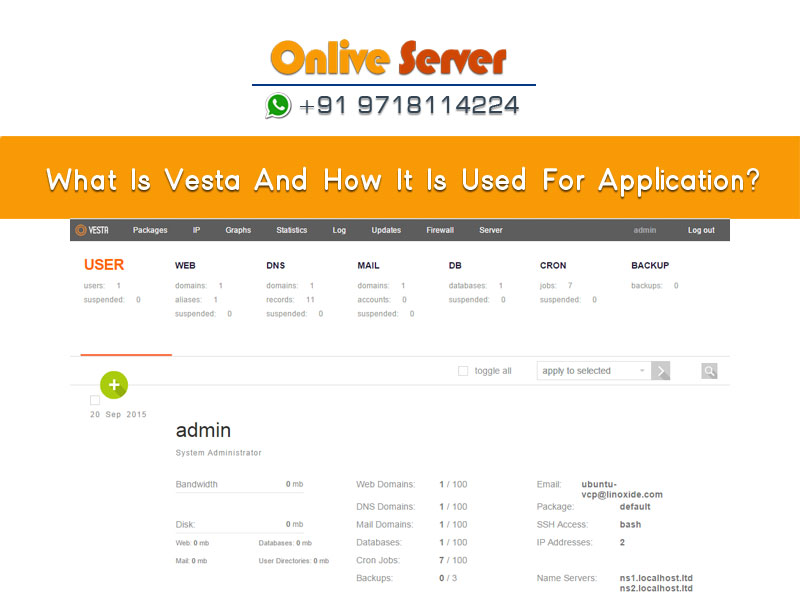
Quick Answer: What Is VestaCP?
VestaCP is a free, open-source web hosting control panel engineered for Linux distributions (CentOS, Debian, Ubuntu). Built with a core philosophy of simplicity and speed, VestaCP utilizes a lightweight bash CLI core and a minimalist web GUI. It popularized the hybrid web server architecture—using Nginx as a high-speed reverse proxy for static assets and Apache as a dynamic application backend—along with native MariaDB databases, Postfix/Dovecot email, and BIND DNS management.
Deploying dynamic web applications on Linux infrastructure requires a hosting management platform that delivers speed, low memory overhead, and straightforward automation. Understanding what is vesta reveals one of the most popular lightweight open-source control panels ever engineered for Linux. Known formally as VestaCP, this platform pioneered the hybrid Nginx reverse proxy plus Apache backend architecture, allowing resource-constrained virtual private servers to serve thousands of concurrent application requests effortlessly. This architectural guide examines how Vesta is engineered, how it accelerates modern web applications, and how it compares to contemporary successors. For verified technical specifications and deployment parameters, consult the official OpenSSL Documentation.
Under the Hood: The Hybrid Nginx + Apache Web Architecture
Before VestaCP gained widespread adoption, standard Linux control panels relied solely on Apache HTTP Server. Apache processes each connection using dedicated worker threads or child processes, which rapidly consumes server RAM when handling hundreds of simultaneous requests for static images, CSS stylesheets, and JavaScript files.
VestaCP solved this bottleneck by standardizing an elegant two-tier reverse proxy architecture:
- Nginx Reverse Proxy Front-End: Listens directly on public HTTP (port 80) and HTTPS (port 443) sockets. Nginx serves all static assets directly from disk at near-zero memory cost, absorbs slow-client connections, and handles SSL/TLS termination.
- Apache Dynamic Back-End: Operates behind Nginx on internal loopback port 8080. Apache only receives requests that require dynamic PHP execution or rely on
.htaccessrewrite rules. - Extreme Resource Efficiency: This hybrid pairing allows a modest cloud server with just 1GB to 2GB of RAM to handle traffic volumes that would traditionally exhaust an unoptimized Apache server.
Control Panel Comparison: VestaCP vs. HestiaCP vs. cPanel
The table below compares VestaCP with its modern community fork (HestiaCP) and commercial hosting solutions:
| Control Panel | Licensing | Architecture | Active Updates | Multi-PHP Support | Recommended Use |
|---|---|---|---|---|---|
| VestaCP | GPL v3 (Free) | Nginx + Apache Hybrid | Infrequent / Legacy | Requires Manual Scripts | Lightweight Single VPS |
| HestiaCP (Active Fork) | GPL v3 (Free) | Nginx + PHP-FPM / Apache | Very Active (Monthly) | Native Multi-PHP (8.0-8.3) | Modern Fast Linux Hosting |
| cPanel / WHM | Commercial Paid | Multi-Server Web Stacks | Enterprise Continuous | Complete EasyApache4 | Commercial Multi-Tenant Hosts |
| CyberPanel | Freemium / Open Source | Pure OpenLiteSpeed | Very Active | Native Multi-PHP | High-Concurrency WordPress |
When hosting modern PHP frameworks (Laravel, Symfony, WordPress) on Vesta, allocate separate physical partitions for MySQL data directories using high-IOPS NVMe storage. Configuring PHP-FPM process managers with tuned `pm.max_children` values guarantees predictable memory usage during viral traffic events, avoiding kernel out-of-memory errors.
For developers looking to host dynamic web applications on agile virtualized infrastructure, our high-speed Linux VPS hosting delivers dedicated vCPU threads, NVMe storage IOPS, and instant provisioning.
- PHP-FPM Process Isolation: Dedicated memory pools preventing cross-tenant resource contention.
- MariaDB Performance Tuning: In-memory InnoDB buffer pools accelerating dynamic database queries.
- Redis Object Caching: Offload transient session storage and reduce SQL execution cycles by up to 70%.
- Offsite Backup Scheduling: Automated nightly archives transferred across secure SFTP/SSH channels.
For high-volume business portals, multi-tenant agency clusters, and enterprise applications requiring physical silicon power without hypervisor virtualization layers, view our bare metal dedicated server infrastructure featuring 1Gbps unmetered network bandwidth.
To learn how VestaCP is utilized for cloud server management and multi-node clustering, explore our companion architectural guide on what is VestaCP and how it is used in cloud server management.
Key Features for Application Developers
VestaCP was built with developers and systems engineers in mind:
1. CLI-First Bash Automation Core
Every single function available in Vesta’s web interface corresponds to a clean, executable bash script located in /usr/local/vesta/bin/ (e.g., v-add-web-domain, v-add-database, v-backup-user). This design allows DevOps teams to automate server provisioning, client setup, and continuous integration deployments directly through bash or Ansible playbooks.
2. Automated Let’s Encrypt SSL/TLS Integration
Securing application domains is effortless. VestaCP includes native Let’s Encrypt support; checking the “SSL Support” and “Let’s Encrypt Support” boxes automatically generates and configures certificates, ensuring end-to-end HTTPS encryption.
3. Built-In Backup & Cron Scheduling
Vesta includes a native automated backup engine that captures complete user archives—including website files, databases, mailboxes, and DNS zone configurations—compressed into clean .tar archives that can be mirrored offsite via FTP or SFTP.
Deploying High-Throughput Web Applications on Vesta Infrastructure
Running high-throughput web applications on Vesta requires aligning the server’s underlying Linux kernel and service parameters with application concurrency demands. While Vesta simplifies the creation of web domains, databases, and mail accounts, deploying demanding frameworks like Laravel, Node.js, or complex WordPress e-commerce platforms requires deliberate performance tuning. The first step involves transitioning PHP execution from legacy prefork modules to modern PHP-FPM pools. This change separates web server processes from PHP execution, allowing administrators to allocate explicit memory limits per tenant while preventing runaway memory consumption.
Database scalability is another critical consideration for application-heavy hosting. Vesta installs MariaDB with conservative default memory allocations suitable for entry-level VPS instances. For production databases serving thousands of read/write queries per minute, adjusting innodb_buffer_pool_size to reflect actual server RAM, enabling the MySQL slow query log, and activating persistent connection pools dramatically improves page render times. Integrating an in-memory Redis or Memcached cache on localhost allows web applications to offload transient session data and database query results, cutting database server CPU load by up to 70%.
Automated backup strategies must also be calibrated for enterprise safety. Vesta’s native backup utility generates comprehensive tar archives containing domain web roots, database dumps, user emails, and DNS records. Scheduling these backups during off-peak hours (e.g., 03:00 UTC) and configuring remote FTP/SFTP offsite transfer destinations guarantees that local disk capacity is never exhausted, protecting web applications from disk-full service crashes.
Frequently Asked Questions (FAQ)
What is the primary advantage of VestaCP over other control panels?
The primary advantage is speed and lightweight resource efficiency. VestaCP runs comfortably on servers with just 512MB to 1GB of RAM, and its hybrid Nginx + Apache architecture delivers exceptional static asset caching and high concurrency.
What is HestiaCP and how is it related to VestaCP?
HestiaCP is an active open-source fork of VestaCP created by community developers. It preserves Vesta’s fast CLI architecture while adding modern features such as multi-PHP version switching, improved webmail security, and continuous monthly software updates.
Which network port does the VestaCP admin dashboard use?
VestaCP listens over HTTPS on TCP port 8083 (https://your-server-ip:8083). This management port can be changed or restricted via firewall rules for security hardening.
Can VestaCP run WordPress and Node.js applications?
Yes. VestaCP provides pre-configured web templates for WordPress, Drupal, and Joomla. Node.js applications can be proxied cleanly through Nginx using custom configuration templates.
Does VestaCP include a built-in firewall?
Yes. VestaCP includes an integrated iptables firewall module and Fail2ban intrusion prevention daemon that automatically bans IP addresses demonstrating suspicious brute-force activity.
Is VestaCP completely free?
Yes. The core VestaCP software is released under the GPL v3 open-source license, allowing free installation and commercial hosting usage without recurring fees.
Conclusion: Lightweight Hosting Engineered for Performance
VestaCP revolutionized open-source hosting by demonstrating that high-performance web architecture does not require complicated, heavy control planes. Its hybrid Nginx and Apache pairing, bash CLI automation, and low memory footprint continue to influence modern control panel design. Deploying lightweight control planes on high-speed NVMe cloud VPS or dedicated bare-metal servers gives developers the agility, performance, and control needed to operate resilient web applications.
