

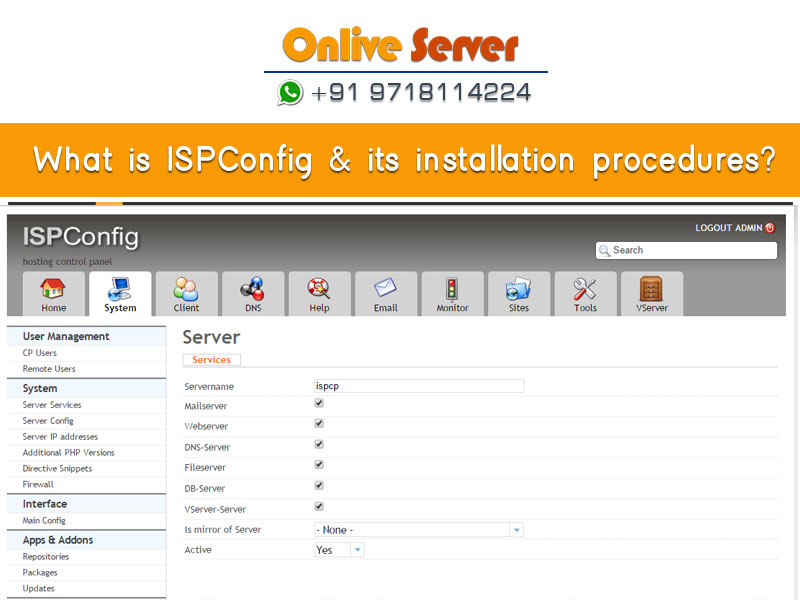
Quick Answer: What Is ISPConfig?
ISPConfig is a mature, free, and open-source Linux web hosting control panel (released under the BSD license) capable of orchestrating single servers or distributed multi-server clusters from a centralized master web interface. It provides comprehensive management for web servers (Apache2 and Nginx), email services (Postfix, Dovecot, SpamAssassin, Amavis), database instances (MariaDB/MySQL), DNS nameservers (BIND, PowerDNS), and FTP servers across Debian, Ubuntu, and RHEL-derived distributions.
Managing complex web hosting clusters across multiple physical or virtual nodes without incurring prohibitive commercial software licensing has made open-source control panels an essential component of enterprise infrastructure. Understanding what is ispconfig reveals one of the most powerful, battle-tested open-source hosting automation suites available for Linux. Engineered specifically for single-server setups as well as multi-server distributed hosting farms, ISPConfig allows web hosting providers, enterprise IT departments, and web developers to manage thousands of websites, email accounts, DNS zones, and databases from a single centralized web interface. This comprehensive technical guide covers the architecture, multi-server design, automated installation, and production tuning of ISPConfig. For verified technical specifications and deployment parameters, consult the official OpenSSL Documentation.
Under the Hood: ISPConfig Distributed Architecture
What distinguishes ISPConfig from standard single-instance panels (like cPanel or DirectAdmin) is its native distributed multi-server architecture. Rather than requiring third-party plugins or complex custom scripts to coordinate multiple servers, ISPConfig was engineered from inception to separate hosting workloads across specialized nodes:
- Master Control Plane Node: Runs the central administrative web GUI and master MySQL database (
dbispconfig). Administrators and resellers log in to this master dashboard to create clients, provision domains, and configure security policies. - Dedicated Web Worker Nodes: Execute Apache2 or Nginx web servers along with multiple concurrent PHP-FPM versions. They communicate with the master node via authenticated database replication over SSL.
- Dedicated Mail Worker Nodes: Host Postfix and Dovecot daemons, anti-spam filters (Rspamd or SpamAssassin), antivirus scanners (ClamAV), and webmail portals (Roundcube), isolating email processing overhead entirely from web traffic.
- Authoritative DNS Nodes: Manage primary and secondary BIND9 or PowerDNS nameservers with automated DNSSEC signing, ensuring sub-second global DNS resolution.
Control Panel Comparison: ISPConfig vs. Commercial & Open-Source Panels
Evaluating hosting management tools requires analyzing licensing overhead, multi-server scalability, and resource efficiency:
| Control Panel | Licensing Cost | Multi-Server Clustering | Web Server Options | Resource Footprint | Best Use Case |
|---|---|---|---|---|---|
| ISPConfig 3 | 100% Free (BSD Open Source) | Native Multi-Server Built-in | Apache2 & Nginx | Very Low (<500MB RAM) | Scalable Hosting Clusters, Agencies |
| cPanel / WHM | High (Per-Account Monthly Fee) | Requires Separate Licenses | Apache, Nginx, LiteSpeed | Moderate (1GB – 2GB RAM) | Commercial Shared Hosting |
| Plesk Obsidian | Commercial Paid | Requires Plesk Multi-Server | Nginx + Apache Reverse Proxy | Moderate (1GB+ RAM) | WordPress Agencies, Windows Hosts |
| Virtualmin | GPL Free / Pro Paid | Supported via Cloudmin | Apache2 & Nginx | Low (Lightweight Perl Core) | Single-Server Sysadmin Control |
Deploy ISPConfig in a multi-server topology where dedicated nodes handle specialized roles: master control, web delivery, mail processing, and secondary DNS. Distributing these roles across low-latency Cloud VPS nodes in different continents guarantees high redundancy and disaster survival for mission-critical client infrastructure.
For organizations establishing independent multi-server hosting environments, deploying on high-speed Linux VPS hosting provides dedicated vCPU cores, isolated memory, and instant provisioning across global regions.
- Multi-Server Master-Slave Nodes: Manage distributed server farms across multiple geographical regions.
- Dual Web Server Engines: Flexible support for Apache and Nginx web servers across distinct nodes.
- Hardened Mail Subsystem: Automated Postfix TLS, Dovecot, SpamAssassin, and Rspamd integration.
- DNS Cluster Mirroring: High-availability BIND and PowerDNS replication preventing domain resolution failure.
When enterprise workloads demand unshared physical CPU performance, massive database memory buffers, and 1Gbps unmetered network bandwidth, hosting your ISPConfig master or web nodes on bare metal dedicated server infrastructure ensures optimal uptime and raw processing power.
To compare ISPConfig with other popular open-source Linux administration suites, explore our comprehensive guide on what is Webmin and why administrators prefer it.
Key Features of Modern ISPConfig Deployments
ISPConfig incorporates an extensive suite of hosting capabilities designed for enterprise stability:
1. Multi-PHP Version Management
Different client applications require different PHP runtime environments. ISPConfig provides native support for multiple concurrent PHP versions (from PHP 7.4 up to PHP 8.1, 8.2, and 8.3). Administrators can configure FastCGI or PHP-FPM pools per website, allowing modern Laravel or WordPress applications to run on modern PHP versions while maintaining legacy sites on older runtimes.
2. Automated Let’s Encrypt SSL/TLS Integration
Securing web traffic is completely automated. With a single checkbox in the ISPConfig GUI, the panel invokes Certbot or acme.sh to generate free, trusted Let’s Encrypt SSL certificates, automatically configuring Nginx or Apache virtual hosts and handling automated 90-day renewal cycles seamlessly.
3. Multi-Tier User Access Control
ISPConfig implements an enterprise 4-tier permission hierarchy: Administrator, Reseller, Client, and Email User. Administrators can enforce strict disk quotas, bandwidth limits, database maximums, and allowed PHP modes per client, making it perfectly suited for commercial hosting operations.
Automated Installation Workflow (ISPConfig Auto-Installer)
In earlier versions, configuring a full ISPConfig “Perfect Server” required manually compiling and configuring dozens of Linux configuration files. Today, the ISPConfig project provides an official automated installer script that configures a complete production hosting stack in under 10 minutes:
- Provisions Apache or Nginx with modern HTTP/2 protocol support.
- Deploys MariaDB Server with automated root credential hardening.
- Installs Postfix, Dovecot, Rspamd, ClamAV, and Roundcube webmail.
- Sets up BIND9 DNS with automated DNSSEC key generation.
- Configures Pure-FTPd with virtual user authentication against the ISPConfig database.
- Installs Fail2ban intrusion prevention with pre-configured jail rules for web, SSH, and mail protocols.
Frequently Asked Questions (FAQ)
Is ISPConfig completely free to use for commercial hosting?
Yes. ISPConfig is released under the open-source BSD license, which grants complete freedom to use, modify, and deploy the software for personal, commercial, or enterprise multi-tenant hosting without any per-server or per-account licensing fees.
Can ISPConfig manage multiple servers from a single dashboard?
Yes. Multi-server clustering is one of ISPConfig’s premier features. A single master node can manage dozens of slave nodes dedicated specifically to web serving, mail hosting, database storage, or DNS resolution across multiple data center locations.
Which Linux distributions are recommended for ISPConfig?
Debian (Debian 11 and 12) and Ubuntu (Ubuntu 20.04 and 22.04 LTS) are the primary recommended operating systems for ISPConfig, offering the most seamless automated installation and packaging support. RHEL-derived distributions (such as AlmaLinux and Rocky Linux) are also supported.
Does ISPConfig support Nginx as an alternative to Apache?
Yes. During installation, administrators can select Nginx or Apache2 as the primary web server. ISPConfig manages Nginx server blocks natively, including automated microcaching and PHP-FPM configuration.
How does ISPConfig handle automated SSL certificates?
ISPConfig integrates directly with Let’s Encrypt. Checking the SSL and Let’s Encrypt options within a website’s settings initiates an automated ACME challenge, provisions the certificate, and configures automated renewal hooks with zero manual intervention.
What security mechanisms protect ISPConfig servers?
ISPConfig incorporates Fail2ban for automated brute-force protection, Rspamd/SpamAssassin for email filtering, ClamAV antivirus, chrooted shell environments for SSH users, and strict Linux permission separation across all virtual sites.
Conclusion: Enterprise Hosting Automation Without Licensing Costs
ISPConfig stands as an exemplary open-source hosting automation platform that rivals expensive commercial control panels in scalability, flexibility, and architectural resilience. By providing native multi-server clustering, automated Let’s Encrypt SSL issuance, multiple PHP runtime management, and lightweight resource consumption, it empowers developers and hosting providers to deliver enterprise-grade services at predictable, budget-friendly costs. Deploy ISPConfig on reliable NVMe cloud VPS or bare-metal dedicated servers to establish an autonomous, high-performance hosting foundation.
