

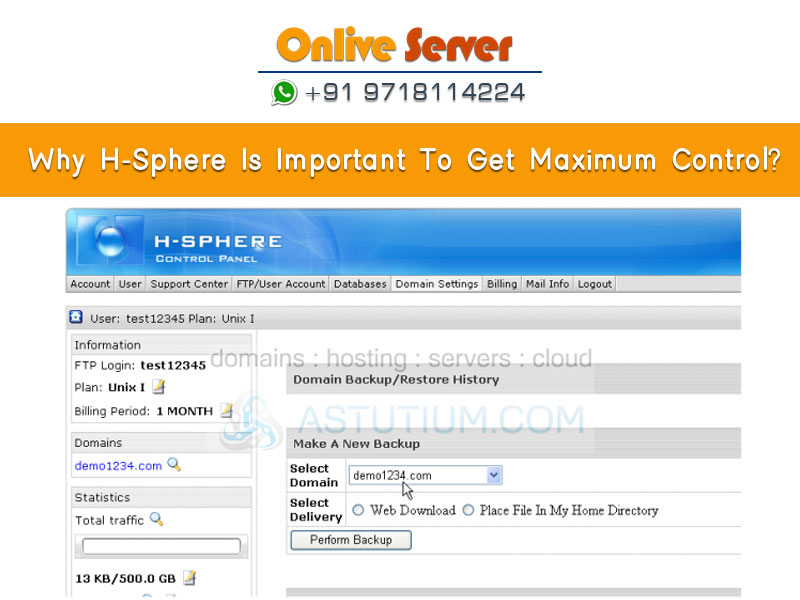
Quick Answer: What Is H-Sphere?
H-Sphere is a multi-server web hosting automation and control panel platform designed to manage distributed hosting services across multiple operating systems from a single central database. Unlike single-box control panels, H-Sphere delegates distinct hosting roles—such as Apache web hosting, qmail/Postfix mail services, MySQL databases, and BIND DNS—to dedicated physical or virtual servers while unifying billing, account provisioning, and technical management within one master control panel.
Managing enterprise hosting infrastructure across multiple physical locations requires software that can coordinate distributed tasks without creating single points of failure. Understanding what is H-Sphere reveals one of the pioneering centralized multi-server hosting automation platforms ever developed. Originally designed by Positive Software and later maintained by Parallels, H-Sphere was built from the ground up to orchestrate separate web, mail, database, and DNS servers through a single master control cluster, providing web hosting providers and infrastructure administrators with maximum operational control. For verified technical specifications and deployment parameters, consult the official Linux Kernel Documentation.
What Is H-Sphere? (Definition and Core Concept)
In the early days of enterprise web hosting, scaling an infrastructure typically meant installing a standalone control panel on every server. If an organization owned ten web servers, five email servers, and two database servers, staff had to manage seventeen individual control panels. User accounts had to be provisioned separately on each machine, making billing integration and synchronized account suspension nearly impossible to automate cleanly.
H-Sphere introduced an architectural breakthrough by separating the control panel interface from the underlying service nodes. In an H-Sphere cluster, customer accounts, domains, mailboxes, and database credentials reside inside a central PostgreSQL database on a dedicated Control Panel (CP) server. The CP server then issues remote commands to individual service servers across the network to execute configuration changes.
This multi-server design ensures that if a web server experiences high traffic spikes or hardware failure, the email infrastructure, DNS cluster, and billing management systems continue running without disruption.
H-Sphere Multi-Server Architecture: How It Works
The operational model of H-Sphere relies on strict functional separation. Rather than forcing a single server to handle all server roles simultaneously, H-Sphere partitions responsibilities across dedicated service nodes:
1. The Master Control Panel Server
The CP server is the central brain of the entire cluster. It does not host public customer websites or mailboxes; instead, it runs the H-Sphere administrative interface, the central PostgreSQL database, the automated billing engine, and the provisioning orchestrator. Because the CP server does not face public web traffic, its attack surface is substantially reduced.
2. Dedicated Web Server Nodes
Web server nodes run web server daemons (such as Apache HTTP server or IIS for Windows environments) and PHP/Perl execution environments. When a user creates a new website via the H-Sphere interface, the CP server connects to the assigned web server node via secure SSH or internal daemons to generate virtual host records and allocate file directory structures.
3. Specialized Mail and DNS Nodes
Email traffic and DNS resolution are isolated on independent servers. Mail nodes run specialized mail transfer agents (such as qmail or Postfix) alongside spam filtering and anti-virus scanners. DNS nodes operate in master/slave configurations using BIND, ensuring geographic redundancy and near-instant propagation of zone modifications across the cluster.
4. Database Server Nodes
Database instances (MySQL, PostgreSQL, Microsoft SQL Server) run on dedicated hardware tuned specifically for high-speed disk I/O and RAM caching. Isolating databases prevents runaway web scripts from starving database queries of memory, maintaining smooth performance even under heavy concurrent visitor traffic.
Key Features of H-Sphere for Infrastructure Management
H-Sphere was engineered to give administrators complete control over enterprise hosting fleets. Its primary technical capabilities include:
- Cross-Platform Support: Unifies both Linux (Red Hat, CentOS, Debian) and Windows Server machines within a single management cluster, allowing hosting providers to sell ASP.NET and LAMP hosting simultaneously.
- Integrated Automated Billing: Features a built-in billing engine that handles credit card processing, automated recurring invoicing, usage quotas, and account suspensions without requiring external billing software like WHMCS.
- Dynamic Server Clustering: Administrators can add new web, mail, or database servers to an active cluster on demand. H-Sphere automatically balances newly provisioned accounts across available nodes.
- Comprehensive Disaster Recovery: Because all configuration data is stored centrally in the master PostgreSQL database, recovering a failed web server simply requires deploying a fresh OS, installing the H-Sphere node package, and letting the CP server reprovision the site configs.
- Hierarchical User Management: Supports three distinct administrative tiers: Root Administrator (infrastructure owner), Resellers (sub-hosting providers), and End Users (individual website owners).
H-Sphere vs. cPanel vs. Plesk vs. Modern Cloud Architecture
Comparing H-Sphere against conventional and modern management panels illustrates how multi-server design principles influence scalability:
| Metric / Architecture | H-Sphere | cPanel / WHM | Plesk Multi-Server |
|---|---|---|---|
| Cluster Design | Native multi-server cluster | Primarily single-server (DNS clustering only) | Extension-based multi-server |
| Database Backend | Centralized PostgreSQL master DB | Local flat files & MySQL | Local SQLite / MariaDB |
| Integrated Billing | Native built-in billing engine | Requires 3rd-party tool (WHMCS) | Requires external plugin / billing app |
| Failure Domain | Isolated (Web down != Mail down) | Single box failure takes down all services | Node-dependent |
| Modern Deployment | Legacy enterprise systems | Dominant shared hosting standard | Popular agency & multi-cloud standard |
In modern production deployments, decoupling H-Sphere control daemons from customer-facing web traffic is essential for stability. Placing database engines on dedicated bare-metal servers equipped with hardware RAID-10 NVMe storage eliminates disk I/O contention during peak traffic hours. Connecting web cluster nodes via private gigabit backplanes ensures seamless multi-tenant scaling without network bottlenecks.
For businesses migrating from legacy multi-server panels toward modern high-performance infrastructure, deploying isolated bare metal dedicated server infrastructure ensures that your web, database, and caching layers operate with full hardware isolation, unmetered bandwidth, and total root access.
- Cross-Platform Orchestration: Manage diverse clusters spanning Linux, FreeBSD, and Windows environments.
- Integrated Billing & Provisioning: Automated customer onboarding, recurring invoices, and resource metering.
- Distributed Service Roles: Separate web, mail, database, and DNS workloads across independent physical nodes.
- Centralized SiteStudio Integration: Built-in website creation tools for streamlined shared hosting delivery.
Modern Lessons from H-Sphere: Building Resilient Hosting Clusters
While H-Sphere pioneered multi-server hosting automation, the principles it introduced remain the foundation of modern cloud architecture today:
- Separation of Concerns: Never place your mission-critical transactional database on the same compute instance as a publicly accessible web application.
- Decoupled Control Planes: Keeping the management interface separate from user workloads prevents denial-of-service traffic on customer websites from freezing sysadmin access.
- Independent Mail Infrastructure: Running mail daemons on separate virtual private servers safeguards your web server IP address from email blacklist fallout. You can deploy reliable high-speed Linux VPS hosting nodes to handle mail filtering and secondary DNS services at low operational cost.
To learn how other open-source control panels approach single-server administrative modularity without complex database clustering, read our in-depth analysis of the Webmin server management panel.
Frequently Asked Questions (FAQ)
What is the main benefit of H-Sphere’s multi-server architecture?
The primary benefit is functional isolation. By separating web, email, database, and DNS services across different physical or virtual servers, hardware failures or traffic spikes on one service do not impact the availability of the others.
Does H-Sphere include automated customer billing?
Yes. Unlike cPanel which requires third-party billing applications like WHMCS, H-Sphere features a fully native billing engine that automates recurring invoicing, payment gateway integration, usage quotas, and account suspensions.
Can H-Sphere manage both Linux and Windows servers simultaneously?
Yes. H-Sphere was engineered as a cross-platform control panel capable of managing Linux (Apache/PHP) and Windows Server (IIS/ASP.NET) hosting nodes within the same centralized cluster.
Where is H-Sphere configuration data stored?
All system configurations, user accounts, and billing data are stored centrally in a master PostgreSQL database hosted on the dedicated Control Panel (CP) server, rather than dispersed across individual node servers.
What is the modern alternative to H-Sphere for enterprise hosting?
Modern hosting clusters typically utilize microservices architecture, Kubernetes container orchestration, or multi-server management platforms like Core-Admin, cPanel DNS clusters, or custom Ansible automation paired with dedicated bare-metal infrastructure.
Conclusion: Maximum Control Through Centralized Infrastructure
H-Sphere proved that enterprise hosting reliability depends on architectural discipline. By decoupling service daemons into specialized nodes and unifying control within a secure central database, hosting providers achieve resilience that single-server panels cannot match. When designing high-availability web applications today, adopting these core principles—functional isolation, independent database layers, and centralized observability—ensures predictable performance and effortless long-term growth.
