


CVE-2026-55654 is a denial-of-service vulnerability in OpenSSH that permits remote attackers to exhaust memory or terminate SSH daemon worker processes by transmitting specially crafted connection packets. Production Linux servers should upgrade OpenSSH to the latest package release, restrict SSH port access via firewall, and enforce connection rate limiting with Fail2ban.
📑 Table of Contents
Quick NavigationTo ensure round-the-clock infrastructure availability, proactive security hardening, and rapid vulnerability patching, partnering with proactive server management and security support safeguards servers against unauthorized access and operational downtime.
Introduction to CVE-2026-55654
CVE-2026-55654 is a security vulnerability identified in OpenSSH that can cause a Denial of Service (DoS) condition in certain environments. The flaw is in the GSSAPI authentication module and can crash the SSH authentication process, preventing legitimate users from accessing remote systems. Although it carries a low CVSS score of 3.7, organisations running Kerberos-based authentication should treat it as a priority and apply the available patch promptly.
What is OpenSSH?
OpenSSH is a free, open-source implementation of the SSH protocol. It enables users to log in to remote systems securely, transfer files between systems, and communicate over the network with strong encryption. OpenSSH is widely used in Linux servers, cloud environments, enterprises, and development setups.
Understanding Denial of Service (DoS) Vulnerabilities
A Denial of Service (DoS) vulnerability is a weakness that allows an attacker to disrupt the normal operation of a service or system. Rather than stealing data, the attacker’s goal is to make the service unavailable to legitimate users by crashing or overwhelming it.
What is CVE-2026-55654?
CVE-2026-55654 is a heap-based out-of-bounds read vulnerability in OpenSSH. The flaw lies in the GSSAPI authentication module, which fails to correctly NULL-terminate the authentication indicator array during cleanup. This can cause the SSH authentication process to crash or exit unexpectedly, resulting in a denial-of-service condition.
How CVE-2026-55654 Works
The vulnerability is triggered during GSSAPI authentication credential handling. When the authentication indicator array is not correctly NULL-terminated, OpenSSH attempts to read memory beyond its allocated bounds. This causes an unstable authentication process and ultimately crashes the SSH service. In environments using Kerberos and GSSAPI for authentication, an attacker can exploit this flaw to disrupt SSH login capabilities.
Affected Systems and Versions
Linux and Unix-based systems running affected versions of openssh-server are at risk. This includes distributions such as Red Hat Enterprise Linux (RHEL) 8 and 9, Ubuntu, Rocky Linux, AlmaLinux, and IBM AIX. Any system running OpenSSH below version 10.3 is vulnerable to this flaw.
Potential Security Risks and Impact
In environments where GSSAPI and Kerberos authentication are enabled, attackers can exploit this flaw to crash the SSH daemon, causing a denial-of-service condition. This disrupts remote access for all legitimate users relying on SSH for server administration, deployments, and automated processes.
Although this vulnerability does not allow data theft or remote code execution, sustained exploitation in a production environment can cause repeated SSH service crashes, resulting in significant operational downtime. Automated processes, CI/CD pipelines, and remote administration tasks that depend on SSH access will all be disrupted until the service is restored and patched.
How to Mitigate CVE-2026-55654
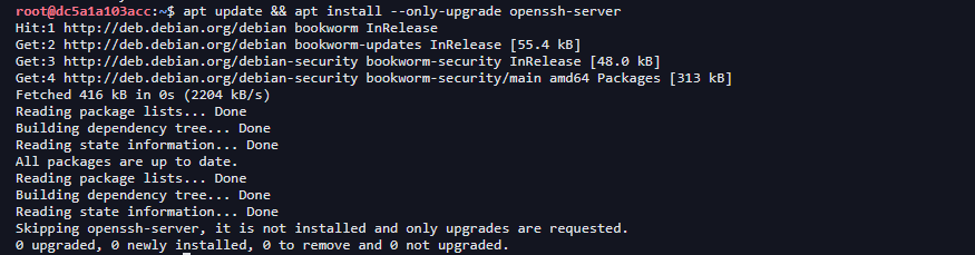
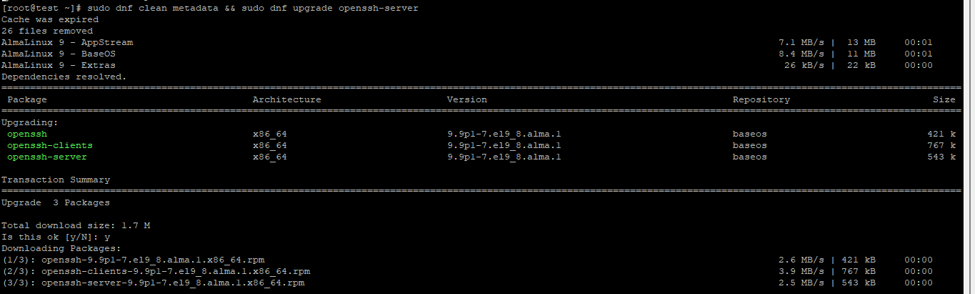
The most effective remedy is to update OpenSSH to a patched version using your distribution’s package manager. Run the appropriate command for your system:
sudo apt update && sudo apt install --only-upgrade openssh-server
sudo dnf clean metadata && sudo dnf upgrade openssh-server
If you cannot patch immediately due to operational uptime constraints, apply the following general memory protection setting as a temporary hardening measure. This restricts process tracing and reduces the risk of local privilege abuse, but it does not replace the need to apply the patch:
sudo sysctl -w kernel.yama.ptrace_scope=2
echo "kernel.yama.ptrace_scope = 2" | sudo tee /etc/sysctl.d/99-ssh-mitigation.conf

Best Practices to Secure OpenSSH Servers
A properly hardened SSH configuration reduces exposure to automated scanning and exploitation. Disable password authentication and require SSH key-based authentication on all server endpoints to eliminate password-based attack vectors.
Ensure /etc/ssh/sshd_config enforces the following settings: PasswordAuthentication no, PubkeyAuthentication yes, PermitRootLogin no. Where possible, combine key-based authentication with multi-factor authentication (MFA) and change the default SSH port from 22 to reduce automated scan noise.
Conclusion: Proactive Mitigation for OpenSSH Infrastructure Security
Keeping OpenSSH updated to version 10.3 or later is the most effective way to eliminate CVE-2026-55654. In environments using GSSAPI and Kerberos authentication, this update should be applied as a priority. Combined with proper SSH hardening, key-based authentication, and regular patching, this provides reliable protection against this and related vulnerabilities. Deploy production workloads on hardened cloud VPS or dedicated bare-metal servers to establish a resilient, highly available server infrastructure.
Frequently Asked Questions (FAQ)
Does restarting the SSH daemon disconnect active sessions?
No. Restarting the SSH service with sudo systemctl restart ssh only affects new incoming connections. Your existing active SSH sessions will not be interrupted.
How can I check which OpenSSH version is installed on my server?
Run ssh -V on a client terminal or sshd -V on the server to display the currently installed OpenSSH version.
Will my existing SSH keys be affected by this vulnerability?
No. Your existing SSH key pairs remain secure and are not affected by this vulnerability. However, your server still needs to be patched to prevent the SSH daemon from crashing when GSSAPI authentication is triggered.
How can server administrators monitor and detect exploitation attempts targeting CVE-2026-55654?
Administrators should inspect system authentication logs (/var/log/auth.log or journalctl -u ssh) for anomalous connection patterns, enable intrusion detection systems (IDS/IPS), and set up automated alert triggers on unexpected SSH daemon terminations.
What server-level security configurations minimize the impact of CVE-2026-55654?
Enforcing strict least-privilege service accounts, restricting SSH port access to trusted VPN subnets via UFW/iptables, disabling password authentication, and configuring Fail2ban rate limiting significantly mitigates exploitation risks.