

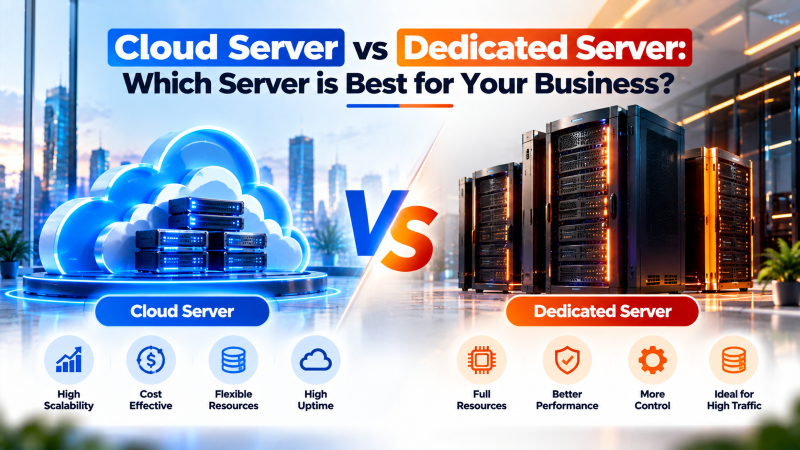
Cloud Server vs Dedicated provides dedicated infrastructure capabilities: ✓ expert verified quick answer: cloud server vs dedicated server the fundamental distinction between a cloud server and a dedicated server is virtualization architecture and hardware ownership. Implementing these verified architecture standards eliminates resource bottlenecks, maintains high availability, and ensures compliant, deterministic system performance.
Deploying and managing production infrastructure for cloud server vs dedicated server: complete architecture & roi guide for 2026 requires aligning systems administration best practices with underlying hardware and network capabilities. Overlooking technical configuration prerequisites or operating with default parameters often leads to latent resource bottlenecks, unpredictable latency, and degraded system reliability. This comprehensive engineering manual explores essential architectural considerations, deployment runbooks, and verified operational benchmarks to ensure high performance and maximum operational stability.
- The Core Architectural Dilemma: Virtual Elasticity vs. Physical Power
- What is a Cloud Server? (Architecture & Strengths)
- What is a Dedicated Server? (Architecture & Strengths)
- Comprehensive Feature Comparison Matrix
- Total Cost of Ownership (TCO) and ROI Evaluation
- Data Security and Transport Layer Encryption
- How to Choose the Right Server for Your Business
- Architectural Deep Dive: Bare Metal Computing vs. Hypervisor Abstraction
The Core Architectural Dilemma: Virtual Elasticity vs. Physical Power
Selecting the optimal hosting infrastructure represents one of the most critical technology decisions an organization can make. Your infrastructure choice directly governs application performance, operational agility, security compliance, and long-term hosting expenses. For verified technical specifications and deployment parameters, consult the official Linux Kernel Documentation.
Modern enterprises frequently face the decision between an elastic cloud VPS and physical bare-metal hardware. While cloud virtualization provides unparalleled flexibility for fluctuating traffic, bare-metal hardware delivers pure computing muscle without shared hypervisor overhead.
Understanding the specific architectural strengths and cost trade-offs of each hosting model ensures your infrastructure aligns perfectly with your technical and financial objectives.
What is a Cloud Server? (Architecture & Strengths)
A cloud server is an isolated virtual machine running on top of a hypervisor (such as KVM) within a pooled cluster of physical servers. Storage is typically decoupled from compute nodes, utilizing centralized Ceph or SAN NVMe storage arrays connected via high-speed fiber networks.
This distributed architecture provides remarkable resilience. If a physical host machine experiences hardware failure, the hypervisor management plane automatically migrates running cloud instances to a healthy node in the cluster with zero data loss.
Primary Advantages of Cloud Servers:
- Instant Elastic Scalability: Add vCPU cores, expand RAM, or increase storage volume sizes in seconds without downtime.
- High Availability & Redundancy: Distributed storage and automated failover protect against unexpected hardware outages.
- Agile Development Workflows: Quickly spin up staging instances, clone production environments, and destroy temporary workloads on demand.
What is a Dedicated Server? (Architecture & Strengths)
A dedicated server is a standalone physical computer housed in an enterprise datacenter rack. When you lease an enterprise bare-metal dedicated server, the entire physical chassis—including processors (Intel Xeon or AMD EPYC), motherboard PCIe lanes, ECC DDR5 RAM, and NVMe drives—is reserved exclusively for your workload.
Because there is no hypervisor layer translating CPU instructions or scheduling disk I/O, your software interacts directly with raw silicon. This direct access unlocks maximum possible throughput and deterministic, microsecond-level latency.
Primary Advantages of Dedicated Servers:
- Unmatched Raw Performance: Zero hypervisor CPU overhead and dedicated memory buses deliver unmatched computational speed.
- Maximum Disk I/O Throughput: Direct PCIe NVMe hardware access unlocks millions of read/write IOPS for massive database operations.
- Predictable Long-Term Economics: Fixed monthly billing eliminates surprise bandwidth overage bills and burst compute surcharges.
- Hardware-Level Compliance: Single-tenant isolation satisfies stringent HIPAA, PCI-DSS Level 1, and GDPR compliance mandates.
Comprehensive Feature Comparison Matrix
Compare the operational characteristics of both hosting paradigms across essential enterprise criteria:
| Architectural Parameter | Enterprise Cloud Server | Bare Metal Dedicated Server |
|---|---|---|
| Tenancy Model | Multi-Tenant (Hypervisor Isolated) | Single-Tenant (100% Bare Metal) |
| Compute Overhead | 2% – 5% Hypervisor Virtualization Layer | 0% (Direct physical execution) |
| Hardware Scalability | Instant (Dynamic vertical scaling) | Manual (Physical component upgrades) |
| Hardware Failure Impact | Automated failover to spare node | Requires technician component swap |
| Cost Predictability | Variable or tier-based monthly | Fixed, unmetered monthly cost |
Total Cost of Ownership (TCO) and ROI Evaluation
When calculating total infrastructure costs over a three-to-five-year horizon, dedicated servers consistently offer superior return on investment for steady-state workloads. Hyperscale public clouds charge premium rates for outbound bandwidth egress, IOPS provisioning, and continuous CPU usage.
Conversely, dedicated hosting bundles generous or unmetered multi-gigabit bandwidth allocations and unrestricted NVMe read/write access into a single flat monthly fee, eliminating billing surprises as your data footprints expand.
This predictable cost structure proves highly advantageous for data-intensive organizations, allowing finance teams to forecast operational infrastructure budgets accurately over multi-year business cycles.
Data Security and Transport Layer Encryption
Regardless of whether you choose virtualized cloud infrastructure or dedicated hardware, securing customer data in transit remains mandatory. Securing application endpoints with a validated SSL certificate guarantees that browser communications, API payloads, and payment transactions remain fully encrypted against interception.
Choosing between cloud servers and dedicated bare-metal servers is one of the most consequential architectural decisions an enterprise can make. The fundamental distinction lies in how each platform interacts with underlying physical hardware components.
Dedicated servers provide exclusive, unshared access to physical CPU cores, direct memory channels, and PCIe storage buses. Without a hypervisor virtualization layer intercepting hardware calls, bare-metal hardware delivers zero virtualization overhead, deterministic memory latencies, and maximum computing efficiency.
In contrast, cloud servers operate as virtual machine instances carved from massive multi-tenant hardware clusters. While hypervisors introduce a 2-5% computational tax, they provide instantaneous provisioning, live vertical scaling, and automated hardware failover that dedicated hardware cannot match natively.
Direct Comparison of Core Enterprise Metrics
Evaluating cloud and dedicated servers across performance, cost, and security parameters clarifies which architecture best aligns with your organizational workload requirements.
- Computational Throughput: Dedicated servers provide 100% of physical CPU cycles, making them ideal for high-performance computing and massive databases.
- Scalability and Provisioning: Cloud servers scale compute resources vertically and horizontally within minutes to absorb sudden viral traffic surges.
- Storage I/O Predictability: Dedicated NVMe drives eliminate noisy-neighbor I/O contention, guaranteeing millions of IOPS without throttling.
- Disaster Recovery Automation: Cloud instances leverage automated cross-datacenter snapshot replication for rapid disaster recovery.
Total Cost of Ownership (TCO) and Regulatory Compliance Realities
At low to moderate traffic volumes, cloud servers provide an economical and flexible entry point because organizations pay solely for allocated virtual resources. However, as enterprise workloads expand to consume hundreds of gigabytes of RAM and petabytes of bandwidth, public cloud costs escalate dramatically.
Dedicated servers feature fixed, transparent monthly billing with unmetered 1Gbps or 10Gbps bandwidth uplinks. For organizations with predictable high-volume workloads, bare-metal hosting routinely slashes annual infrastructure expenditures by 40% to 65% compared to public cloud providers.
- Predictable Monthly Invoicing: Eliminate surprise egress bandwidth charges and per-operation API invocation billing.
- Single-Tenant Compliance Isolation: Bare metal satisfies strict HIPAA, PCI-DSS, and GDPR requirements by eliminating multi-tenant hardware sharing.
- Hardware Customization: Tailor physical RAID arrays, configure custom GPU accelerators, and select exact CPU core clock profiles.
- Hybrid Infrastructure Deployments: Combine dedicated bare-metal database backends with elastic cloud web frontends for the ultimate hybrid architecture.
Hardware Customization Flexibility and Bare Metal Autonomy
Dedicated bare-metal hosting provides organizations with complete physical hardware autonomy that multi-tenant public clouds cannot match. Enterprises can specify exact CPU clock speeds, configure custom hardware RAID controllers, and deploy dedicated GPU processing units.
This architectural freedom is vital for machine learning model training, video rendering, and financial modeling where specialized hardware accelerators are required. Operating on dedicated silicon maximizes computing efficiency while keeping infrastructure costs completely predictable.
- Hardware Direct Memory Access: Run high-performance databases directly on physical L3 processor caches.
- Dedicated PCIe Gen4 Storage: Eliminate shared cloud storage contention with single-tenant NVMe controllers.
- Predictable Enterprise Cost Models: Eliminate surprise egress data fees with unmetered network uplinks.
Conclusion: Aligning Infrastructure Architecture with Strategic Vision
Neither cloud servers nor dedicated servers represent a universally superior choice; rather, each platform excels across specific operational demands. Cloud servers provide unmatched agility and rapid scalability for dynamic, unpredictable workloads, while dedicated servers offer raw power, security isolation, and unbeatable economic predictability for sustained enterprise scale.
By evaluating your platform’s computational requirements, compliance obligations, and budget realities, you can architect an infrastructure model that maximizes speed, reliability, and long-term business profitability.
Frequently Asked Questions (FAQ)
What infrastructure prerequisites should be verified before deploying Cloud Server vs Dedicated Server?
Confirm dedicated CPU core availability, sufficient ECC RAM headroom, and redundant NVMe RAID storage prior to deployment. Establishing baseline IOPS and network throughput benchmarks ensures the underlying hardware aligns with peak concurrency requirements.
How can I prevent performance degradation during peak concurrent workloads?
Eliminate single-layer bottlenecks by pairing fast in-memory caching (such as Redis) with properly sized worker process pools and asynchronous job queues. Continuous resource telemetry alerts you to rising CPU wait times before end-user latency spikes.
What security hardening steps are critical for production hosting environments?
Restrict SSH access exclusively to cryptographic key pairs, enforce stateful firewall policies limiting exposed ports to essential services, and apply automated OS security updates. Isolating database listeners to private internal networks prevents external brute-force exposure.
How do I safely troubleshoot sudden resource spikes or service crashes?
Inspect system journals via journalctl -xe, review dmesg logs for kernel OOM events, and monitor real-time disk and socket activity using iostat and ss. Pinpointing whether CPU, RAM, or disk I/O saturated first guides accurate remediation.
Why do dedicated resources outperform shared hosting for business-critical operations?
Dedicated compute and isolated virtual private servers prevent noisy-neighbor resource contention, guarantee predictable network throughput, and grant root-level control to tune kernel, web server, and database parameters for optimal stability.
What backup validation practices protect against unexpected operational downtime?
Implement automated daily off-site backups stored separately from the production server, enforce encryption in transit and at rest, and run quarterly restore tests in staging to verify data integrity and recovery time objectives.
Production Server Architecture for Cloud Server vs Dedicated Server: Complete Architecture
Sustained workload performance for Cloud Server vs Dedicated Server: Complete Architecture requires isolated compute resources, enterprise NVMe storage, dedicated IPv4 routing, and 24/7 systems engineering support without noisy-neighbor contention.