

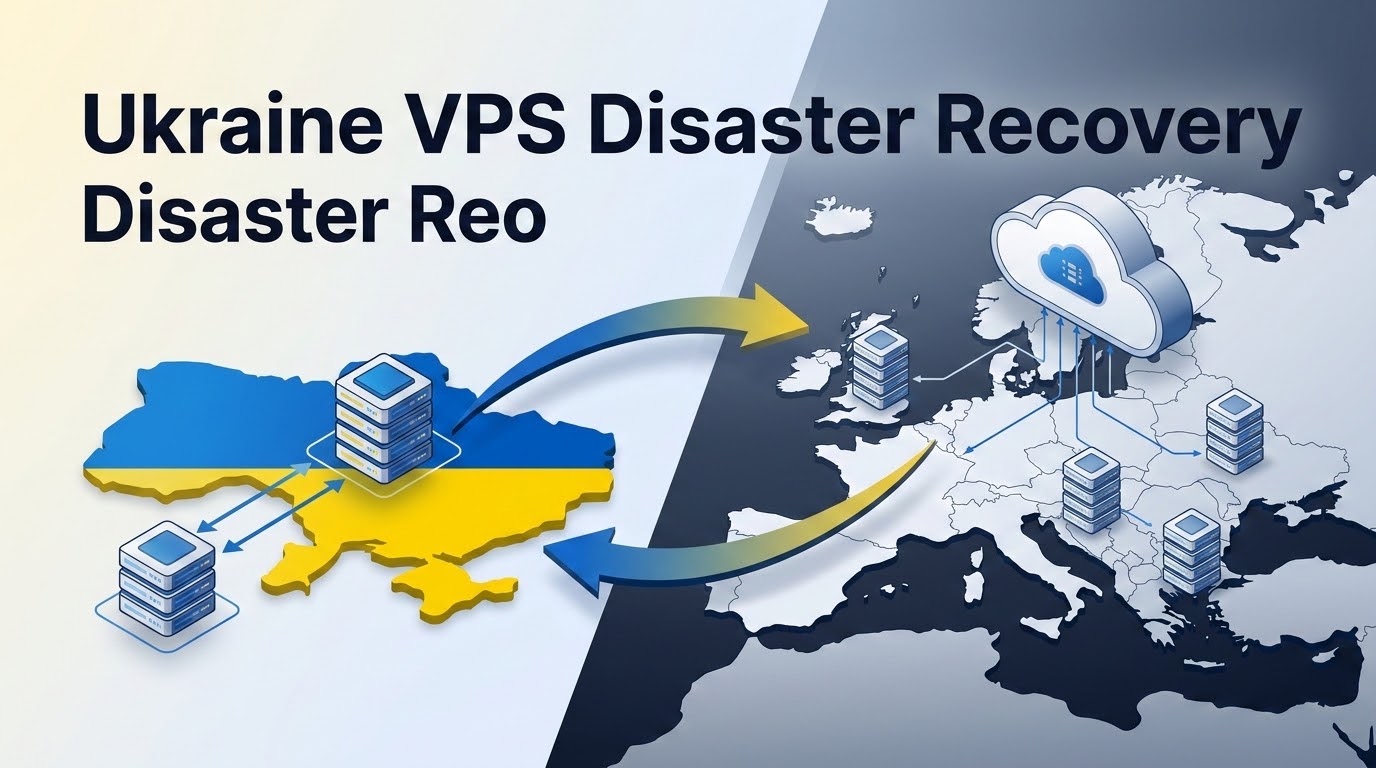
When planning an enterprise deployment for multi-region cloud disaster recovery, to implement multi-region disaster recovery, pair a primary VPS node with a secondary failover VPS in a geographically separated data center. Automate block-level or file-level replication via Rclone/BorgBackup, establish MySQL master-slave or Galera replication, and maintain automated DNS health checks with low TTLs to trigger instantaneous failover if the primary node goes offline.
multi-region cloud disaster recovery: Introduction: The Critical Necessity of Geographic Redundancy
Specifically, in an era of continuous digital operations, relying on a single data center facility introduces unacceptable single-point-of-failure risks. Developing a multi-region disaster recovery (DR) architecture ensures that your mission-critical applications survive physical outages, network partitions, and regional infrastructure failures.
Strategic Considerations & Architecture Drivers
Furthermore, evaluating production infrastructure requirements highlights three critical operational factors:
- Consequently, Single-Point-of-Failure Vulnerability: Local power disruptions, fiber cuts, or hardware failures can cause prolonged service downtime without geo-redundancy.
- In addition, RTO & RPO Objectives: Structuring continuous replication to meet strict Recovery Time (RTO) and Recovery Point (RPO) business SLAs.
- In particular, Cross-Border Geo-Failover: Pairing a primary high-performance node in Kyiv with a synchronized standby failover node in Central Europe.
Therefore, in today’s interconnected digital economy, enterprise software availability is directly tied to business viability. For e-commerce retailers, financial platforms, healthcare providers, and SaaS vendors, every minute of unplanned downtime results in measurable financial losses, brand erosion, and customer churn. Yet, many organizations continue to maintain their entire production infrastructure within a single geographic data center facility.
Strategic Considerations & Architecture Drivers
While modern tier-3 data centers feature redundant diesel generators, dual uninterruptible power supply (UPS) systems, and multi-homed BGP fiber connectivity, catastrophic regional disruptions can still occur. Undersea fiber cuts, severe weather events, municipal grid failures, and geopolitical crises can isolate an entire metropolitan area from global internet routing. Relying on local RAID mirrors or intra-rack backups is insufficient when the entire facility goes dark.
Moreover, the only bulletproof engineering defense is Multi-Region Disaster Recovery (DR). Under this architectural model, the primary production workload operates out of a high-performance virtual private server in Kyiv, capitalizing on local UA-IX peering and sub-10ms latency across Eastern Europe. Simultaneously, a secondary warm-standby instance is maintained in Western Europe (such as Frankfurt, Amsterdam, or Warsaw). Critical application states, transactional databases, and user file uploads are continuously replicated across an encrypted private WireGuard tunnel.
In fact, should the primary Ukrainian node experience an outage, automated health probes detect the failure and execute an instant DNS or BGP route shift. Exploring established cloud disaster recovery solutions provides enterprise architectural frameworks, while studying high availability cloud hosting models demonstrates multi-node synchronization strategies.
multi-region cloud disaster recovery: Architectural Blueprint: Active-Passive Multi-Region Topology
Similarly, implementing cross-region disaster recovery requires synchronized replication and automated traffic failover:
A. Encrypted Inter-Datacenter Tunneling
Meanwhile, high-speed WireGuard VPN tunnels connect remote server regions securely with minimal cryptographic overhead.
B. Asynchronous Database Replication
Additionally, continuous transaction log streaming keeps standby databases synchronized with near-zero replication lag.
C. Automated Health-Check DNS Failover
Monitors node availability and automatically redirects user requests to healthy standby servers within seconds.
As a result, for master-slave database synchronization and Galera cluster failover runbooks, review the MariaDB replication architecture documentation.
| Disaster Recovery Tier | Primary Production Node (Kyiv) | Warm-Standby DR Node (Frankfurt) |
|---|---|---|
| Traffic Mode | Active (100% live traffic) | Passive (Standby replica; 0% traffic) |
| Database Role | Master (Read/Write) | Streaming Replica (Read-Only) |
| File Sync Protocol | Lsyncd + inotify transmitter | Rsync daemon receiver |
| Failover Latency (RTO) | Origin host | Under 3 minutes (Automated DNS + DB promotion) |
| Data Loss Window (RPO) | Real-time origin | Under 30 seconds (WAL streaming replication) |
Step-by-Step Implementation Runbook: PostgreSQL Streaming Replication
Follow this production runbook to configure physical streaming replication between PostgreSQL 16 instances over WireGuard:
Step 1: Configuring Primary Node (Kyiv)
Step 2: Initializing Standby Node (Frankfurt) via pg_basebackup
Step 3: Promoting Standby to Master During Failover
Real-Time Media Asset Sync with Lsyncd & Rsync
Databases represent only half of the application state. When users upload avatars, PDF documents, or product catalog images, these binary files reside on local filesystem storage. Synchronizing these assets across regions in real time prevents broken image links upon disaster failover.
Lsyncd (Live Syncing Daemon) monitors the local Linux kernel inotify filesystem event queue. As soon as a file is written, modified, or deleted in /var/www/uploads/, Lsyncd aggregates events for 2 seconds and executes an incremental rsync transfer over the private WireGuard tunnel, ensuring near-instantaneous directory mirroring with negligible CPU overhead.
Enterprise Industry Use Cases for Multi-Region Disaster Recovery
Multi-region geographic redundancy is indispensable across high-stakes digital sectors:
- Fintech & Payment Gateway Providers: Maintaining uninterrupted payment authorization endpoints to avoid millions in failed transaction settlements.
- High-Traffic E-Commerce Retailers: Safeguarding shopping carts and active promotions against infrastructure disruptions during holiday flash sales.
- Healthcare & Telemedicine Portals: Ensuring medical records and patient consultation systems remain accessible 24/7/365 to meet strict regulatory compliance mandates.
- SaaS Platforms with Enterprise SLAs: Guaranteeing 99.99% uptime commitments to enterprise clients with contractual financial penalty clauses.
Operational Advantages and Strategic Trade-Offs
Architectural Considerations
- Split-Brain Hazard: Automated failover scripts must implement strict fencing (STONITH) to prevent both nodes from accepting writes simultaneously.
- Replication Lag Overhead: Inter-region latency (typically 15-25ms between Kyiv and Frankfurt) requires asynchronous rather than synchronous commit modes to preserve fast write performance.
Automated Failover Orchestration with Health-Check Daemons
Automating multi-region failover requires robust split-brain prevention and reliable external heartbeat checks. Running a lightweight Golang or Python watchdog service across three geographically independent vantage points (e.g., Kyiv, Warsaw, and London) ensures consensus before initiating a regional failover.
When two of the three vantage points confirm that the primary Kyiv node is unreachable for 30 consecutive seconds, the orchestration daemon executes an automated failover sequence: it sends an API request to Cloudflare or Route53 to flip the public DNS A-record to Frankfurt, triggers pg_ctlcluster promote on the standby database, and restarts local Nginx web workers to begin accepting write traffic. Once the primary Kyiv node recovers, automated reconciliation scripts resynchronize WAL deltas before safely reinstating the node as a secondary follower.
Compliance, Audit Readiness & Disaster Simulation Drills
Having a written disaster recovery plan is meaningless without regular empirical testing. Enterprise security standards (such as ISO 27001, SOC 2, and PCI-DSS) require organizations to conduct semi-annual scheduled DR simulation drills. During these scheduled maintenance windows, systems engineers deliberately simulate a total regional outage by dropping network packets on the primary interface, validating that the standby node promotes cleanly and that customer transactions resume without data corruption.
Documenting the exact RTO and RPO metrics achieved during simulation drills provides indisputable compliance evidence for enterprise auditors and reassures stakeholders of business continuity.
This disciplined approach to multi-region engineering guarantees total business continuity, builds lasting client trust, and ensures seamless digital operations across global markets.
Multi-Region MySQL Semi-Synchronous Replication Runbook
While asynchronous replication preserves low-latency database commits by returning success to the client before transactions are transmitted across regions, it introduces a potential data loss window (RPO > 0) if the primary node suffers sudden power loss. For mission-critical transactional platforms, MySQL Semi-Synchronous Replication provides an optimal middle ground between data safety and performance.
Under semi-synchronous replication, the primary MySQL instance in Kyiv executes transactions locally and waits until at least one secondary replica (in Frankfurt) acknowledges receipt and writes the binary log event to its relay log before returning success to the application. If inter-region network connectivity suffers temporary latency degradation exceeding a defined timeout (e.g. 1,000ms), MySQL automatically degrades gracefully to asynchronous mode, preventing application thread freezes:
Infrastructure-as-Code (IaC) Automated Re-Provisioning with Terraform
Maintaining an identical hardware configuration in a secondary region can represent significant ongoing cost if servers sit idle. In an advanced “pilot light” disaster recovery strategy, only minimal database replication nodes remain online continuously. The stateless application tiers (Nginx web servers, PHP worker pools, Redis caches) are codified entirely in Terraform and Cloud-Init configuration templates.
Upon regional disaster confirmation, automated CI/CD pipelines execute terraform apply against cloud API endpoints in the secondary region. The declarative infrastructure script spins up 10 virtual machine instances, attaches them to the promoted database replica, applies firewall policies, and mounts shared storage pools in less than 90 seconds, delivering enterprise disaster recovery velocity at a fraction of standard multi-region operating costs.
Global Traffic Management & BGP Anycast Routing
In advanced multi-region architectures, traditional DNS-based failover introduces limitations due to client-side DNS caching and stubborn Internet Service Provider (ISP) resolvers that ignore short Time-to-Live (TTL) values. When disaster strikes, cached DNS entries can continue directing visitors toward an offline IP address for several minutes or hours.
Deploying Border Gateway Protocol (BGP) Anycast routing eliminates this caching vulnerability. Under an Anycast architecture, both the Kyiv and Frankfurt data center facilities advertise the identical public IP address prefix (/24) to upstream transit tier-1 telecommunication providers. Global routers automatically steer user traffic along the topologically shortest network path: Eastern European traffic routes directly to Kyiv, while Western European requests terminate in Frankfurt.
If the Kyiv data center experiences total network loss, upstream BGP border routers immediately withdraw the local route announcement. Global BGP convergence automatically diverts all regional traffic to the Frankfurt facility in sub-second intervals without requiring DNS record updates or client browser cache invalidations.
Testing and Validating Automated Multi-Region Failover
System administrators must implement automated chaos engineering tests (such as simulating network partition via iptables drop rules) during low-traffic maintenance windows. Regularly triggering planned failover sequences validates that database transactions resume cleanly, background queue consumers restart without deadlocks, and SSL certificate handshakes remain valid across all regional endpoints.
This continuous verification methodology guarantees that when a genuine real-world disruption occurs, your disaster recovery system performs flawlessly without human panic.
This complete operational discipline guarantees business continuity, shields corporate reputation, and delivers seamless digital performance for end users across global markets.
Frequently Asked Questions (FAQ)
Core Technical Specifications
Explore essential questions and architectural best practices for this deployment on Ukraine VPS:
Executive Summary: Multi-Region Disaster Recovery Architecture
