

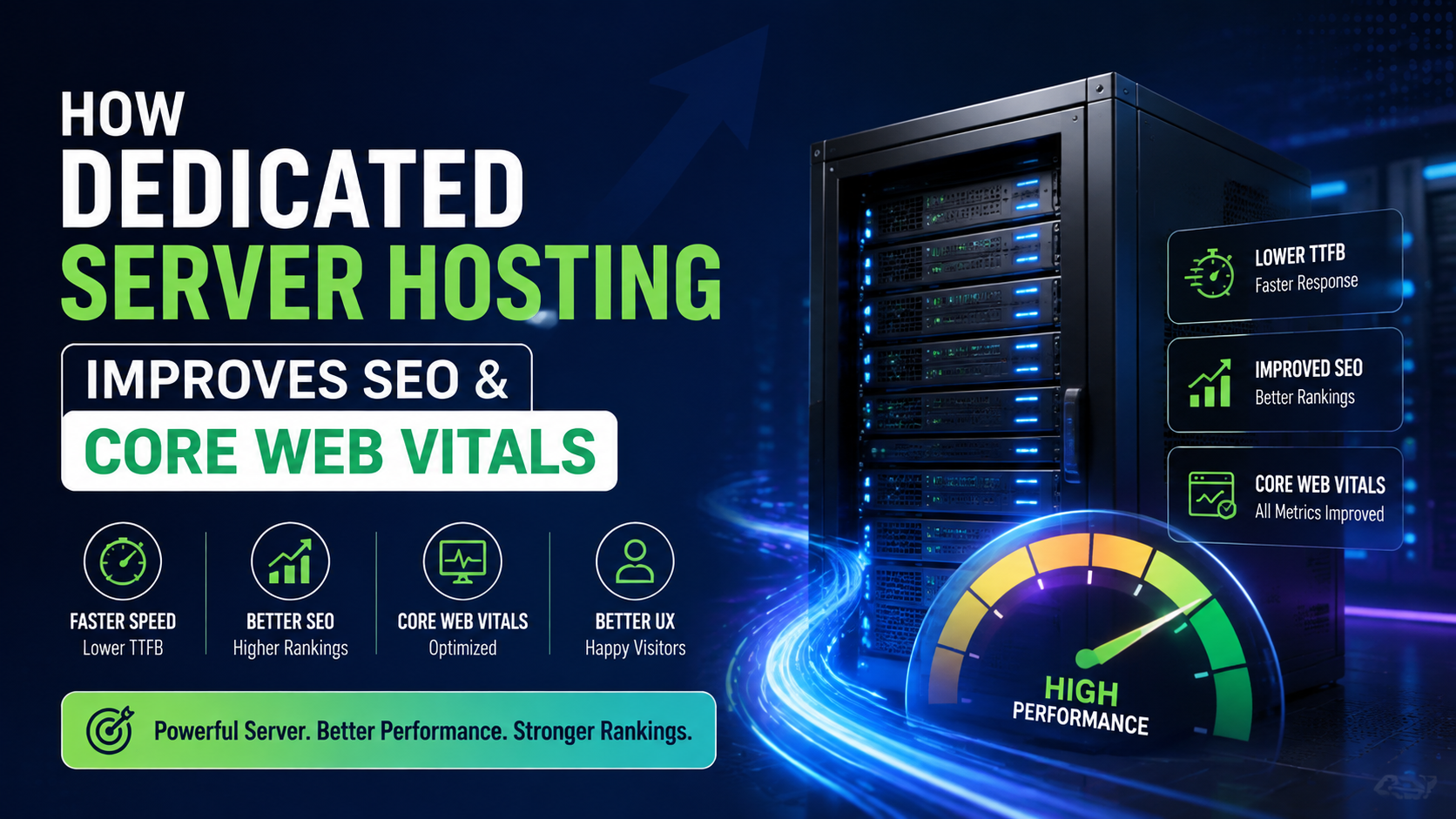
Dedicated server hosting directly enhances Google SEO rankings and Core Web Vitals by providing 100% dedicated hardware resources that minimize server response time (TTFB < 100ms) and prevent Largest Contentful Paint (LCP) delays. Unlike shared hosting where noisy neighbors cause resource contention, dedicated bare metal delivers consistent page load speeds, zero downtime crawler timeouts, and dedicated IP addresses untainted by malicious spam neighbors.
When webmasters attempt to optimize page experience scores exclusively on shared hosting or congested virtual machines, they frequently hit an immovable performance wall. Frontend optimization alone may not solve performance issues when the server backend has slow response times or high processing delays. For verified technical specifications and deployment parameters, consult the official Linux Kernel Documentation.
While basic websites can begin on budget VPS hosting server solutions, competitive e-commerce stores, high-traffic publishing portals, and enterprise SaaS platforms require dedicated bare-metal servers to deliver sub-100ms server response times. Below is your technical blueprint for infrastructure-level SEO acceleration.
1. The 3 Pillars of Server-Driven Core Web Vitals Mastery
A dedicated server improves SEO mainly in three ways: faster page loading, better user experience, and more reliable crawling for search engines:
2. The Mechanics of TTFB: Why Server Speed Governs LCP
Largest Contentful Paint (LCP) measures the time it takes to render the largest visible element on screen (target: under 2.5 seconds). LCP is composed of four consecutive phases:
- Time to First Byte: A properly optimized dedicated server with fast NVMe storage can significantly reduce TTFB compared with shared hosting environments.
- Resource Load Delay: Time before the browser discovers critical CSS, fonts, and hero images. Sub-100ms TTFB allows the HTML parser to trigger asset downloads hundreds of milliseconds earlier.
- HTTP 103 Early Hints Preloading: Dedicated Nginx web servers can emit
103 Early Hintsheaders immediately while backend PHP scripts render, instructing browsers to download hero images and webfonts in parallel. - Server-Side CLS Elimination: High-performance server-side rendering pre-populates image width/height aspect-ratio attributes and server-inlined critical CSS, eliminating Cumulative Layout Shift during browser paint.
- Resource Load Time: Network transfer duration of critical visual assets, greatly accelerated by unmetered 1Gbps / 10Gbps dedicated port uplinks and HTTP/3 QUIC transport. Discover next-gen hardware in our guide to the future of budget bare metal hosting.
- Element Render Delay: Client rendering time. Because the server delivers optimized critical CSS and pre-compiled HTML templates instantly, the browser paints the hero element effortlessly.
3. NVMe Gen5 Storage, Redis in DDR5 RAM & Database Speed
Dynamic Content Management Systems (WordPress, Magento, Drupal) generate web pages through complex database queries and PHP runtime execution:
A. High-performance NVMe storage for faster database operations
Enterprise NVMe storage provides faster read/write performance compared with traditional storage solutions, helping improve database operations, application response times, and overall website performance under demanding workloads.
B. Dedicated Redis & Memcached in DDR5 ECC Memory
With dedicated RAM resources, administrators can use caching solutions like Redis and Memcached to reduce repeated database processing.
4. Production Linux Web Server CWV Optimization Toolkit
Configure your dedicated server stack over SSH for maximum Core Web Vitals performance. Learn how to secure SSH access in our guide on connecting to remote servers via SSH.
5. Improving Googlebot & Bingbot Crawl Efficiency
Search engine crawlers allocate a finite amount of crawl budget to each domain based on two variables: Crawl Demand and Crawl Rate Limit:
- Adaptive Crawl Rate Throttling: Faster server response times help search engines access and process website content more efficiently, especially for large websites with frequently updated pages.
- Faster Indexing of Deep E-Commerce URLs: Large websites with thousands of pages can benefit from faster server responses, helping search engines crawl updated content more efficiently.
- Zero Dropped Crawls During Peak Traffic: Unlike overloaded hosting environments, properly configured dedicated servers provide more stable resources during traffic spikes and help reduce the risk of server-side availability issues.
- Automated Disaster Recovery & System Backups: Maintain regular offsite server snapshots to ensure zero data loss and business continuity. Review our disaster recovery strategies in disaster recovery planning and system backups.
6. Hosting Infrastructure vs. Core Web Vitals & SEO Matrix
Compare how different hosting environments perform across Google’s technical ranking factors:
| Performance Factor | Shared Web Hosting | Standard Cloud VPS | Bare-Metal Dedicated Server |
|---|---|---|---|
| Time to First Byte (TTFB) | 600ms – 1,500ms (Poor) | 250ms – 450ms (Average) | 40ms – 150ms (Optimized Performance) |
| Largest Contentful Paint (LCP) | 3.8s – 6.5s (Fails CWV) | 2.4s – 3.2s (Borderline) | 0.9s – 1.6s (strong performance) |
| Interaction to Next Paint (INP) | 350ms+ (Thread Stalls) | 180ms – 240ms (Moderate) | < 50ms (Zero Main-Thread Jitter) |
| Googlebot Crawl Budget Efficiency | Throttled / High Timeout Risk | Standard Crawl Rates | Improved Crawl Efficiency |
7. Real-World Case Studies: SEO & Core Web Vitals Transformation
Example Scenario: Improving E-commerce Performance With Dedicated Hosting
A large e-commerce website with thousands of products experiences slow loading times. After moving to dedicated hosting with optimized caching and storage, the website can achieve better response times and improved user experience.
Example Scenario: Handling Traffic Spikes With Dedicated Hosting
A high-traffic publishing website can use dedicated infrastructure, caching, and optimized server configuration to handle traffic spikes more effectively while maintaining better availability. Learn how to launch scalable applications in our guide on releasing your web applications on dedicated servers.
8. Top 5 Pitfalls in Server Performance for SEO
📌 Frequently Asked Questions (FAQ)
Q
What is an ideal Time to First Byte (TTFB) score for Google Core Web Vitals?
Q
How does server hardware affect the new Interaction to Next Paint (INP) metric?
Q
Does Onlive Server provide pre-configured dedicated servers optimized for SEO & speed?
Conclusion: Boosting Search Rankings and Core Web Vitals with Dedicated Hosting
Search engines prioritize lightning-fast, highly responsive websites. Migrating mission-critical portals to dedicated bare-metal infrastructure directly drives faster TTFB, smoother Core Web Vitals, and enhanced user satisfaction.
Ensure maximum search visibility and rapid page rendering with zero shared-resource interference. Power your business website on Onlive Server high-speed dedicated server hosting.
When processing intensive multi-threaded database transactions or mission-critical enterprise workloads, deploying on enterprise dedicated server hosting provides bare-metal hardware performance, custom RAID arrays, and dedicated unmetered bandwidth.
9. Conclusion: Strengthen Your Technical SEO Foundation
High search engine rankings require a strong technical foundation. By deploying websites on reliable dedicated servers with powerful processors, fast NVMe storage, optimized caching, and modern web protocols, businesses can improve website speed, stability, and Core Web Vitals performance. Supercharge your website speed and organic search performance with Onlive Server today and benefit from high-performance server hardware, reliable infrastructure, and expert technical support.